
How To Use A Portable Dishwasher
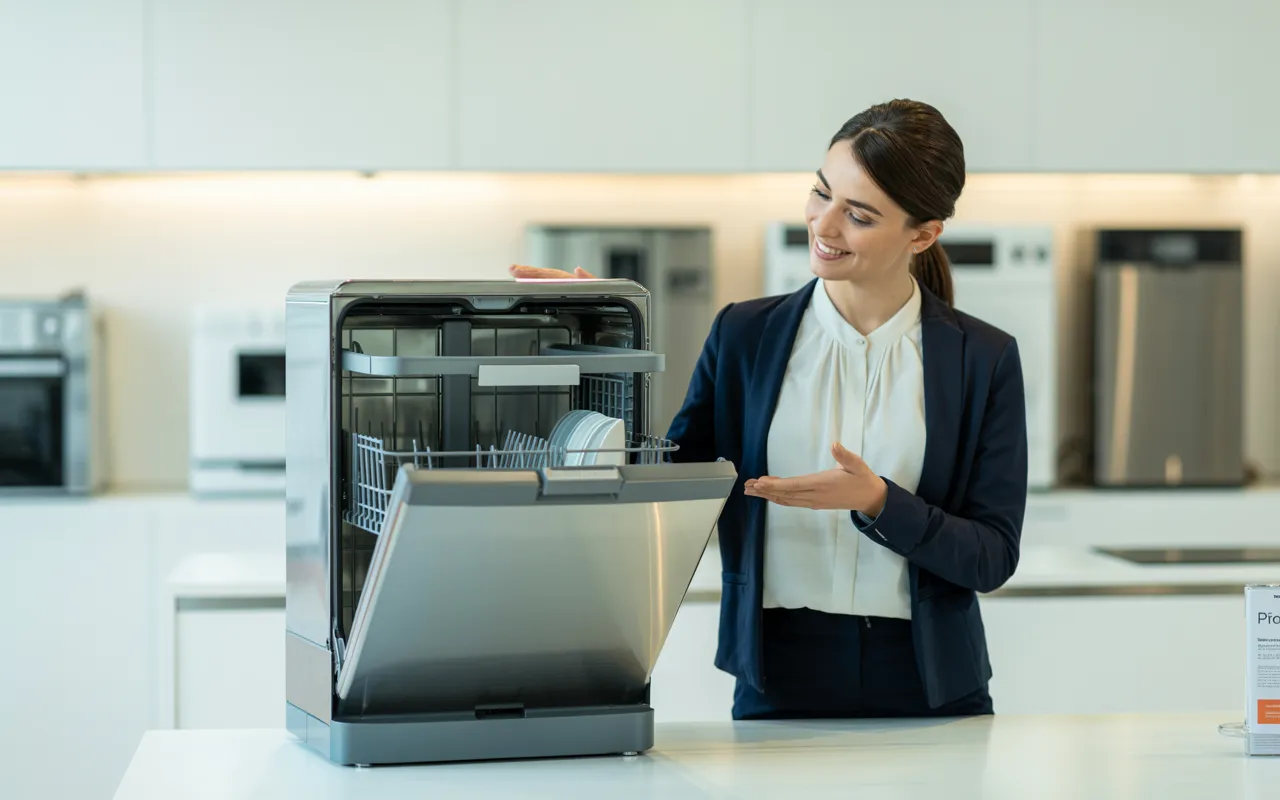
How To Use A Portable DishwasherLearn How To Use A Portable Dishwasher efficiently with our step-by-step guide. Save time, keep your kitchen clean, and enjoy hassle-free dishwashing.
Portable dishwashers are becoming increasingly popular for households with limited kitchen space or for those who prefer a flexible, movable appliance. If you are new to these handy machines, you may wonder exactly how to make the most of them. This article will guide you through everything about How To Use A Portable Dishwasher effectively, from setup to cleaning and maintenance. By following this guide, you can save time, conserve water, and enjoy sparkling clean dishes with minimal effort.
What Is A Portable Dishwasher?
A portable dishwasher is a compact, movable appliance that functions like a regular dishwasher but can be connected to a standard kitchen faucet. Unlike built-in models, portable dishwashers are on wheels, making them easy to move around and store when not in use. They are perfect for apartments, small kitchens, or situations where permanent installation is not possible.
Portable dishwashers are available in various sizes, typically accommodating 6 to 12 place settings. Despite their smaller size, they offer multiple wash cycles, energy efficiency, and convenience.
“A dishwasher saves time, energy, and your sanity. Portable or not, the principle remains simple: clean dishes without stress.” – Laura Bennett
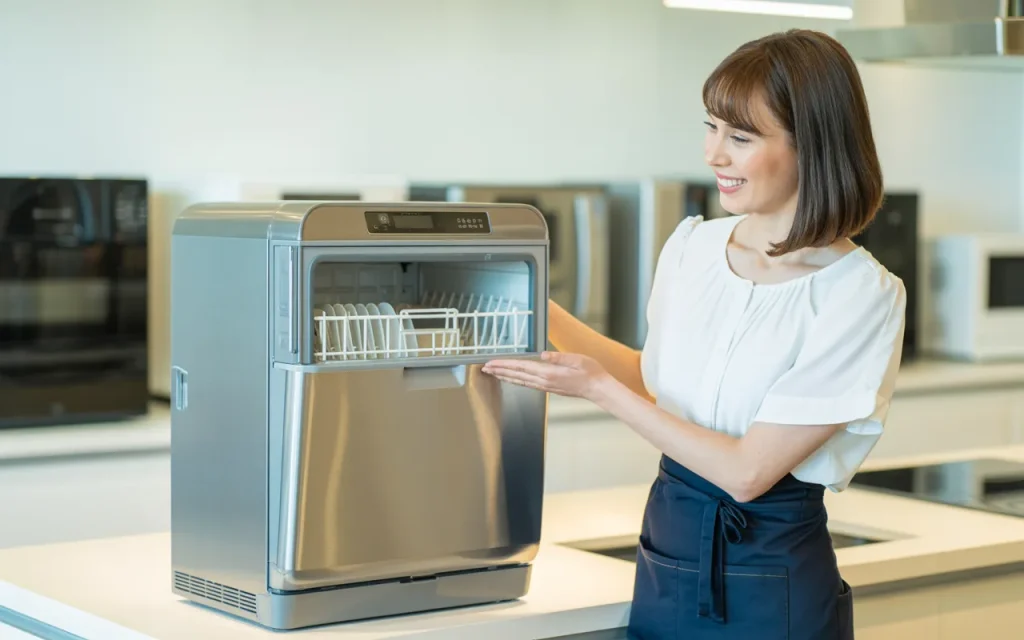
Advantages Of Using A Portable Dishwasher
Using a portable dishwasher has several benefits:
-
Space-saving: Fits in kitchens without built-in dishwasher space.
-
Flexible installation: Connects to the faucet easily and can be stored when not needed.
-
Water-efficient: Uses less water compared to hand washing large loads.
-
Time-saving: Handles multiple dishes at once, freeing up time for other tasks.
-
Energy-saving: Modern models consume minimal electricity while cleaning efficiently.
Step-By-Step Guide: How To Use A Portable Dishwasher
Using a portable dishwasher is straightforward, but following the steps carefully ensures the best cleaning results. Here is a complete guide on How To Use A Portable Dishwasher.
Placement and Connection
-
Place the dishwasher near the sink.
-
Attach the water inlet hose to your kitchen faucet. Most portable dishwashers come with a universal faucet adapter.
-
Ensure the drain hose is positioned securely over the sink edge to prevent leaks.
Loading The Dishwasher
Proper loading is essential for effective cleaning.
Tips for Loading:
-
Load larger items like pots and pans at the sides or back.
-
Place plates vertically in the lower rack.
-
Arrange cups, glasses, and smaller items on the upper rack.
-
Avoid overcrowding, as water and detergent need space to circulate.
| Item Type | Placement Tip |
|---|---|
| Plates | Lower rack, vertical |
| Cups/Glasses | Upper rack, inverted |
| Pots/Pans | Back or sides of lower rack |
| Cutlery | Cutlery basket, separated |
Step 3: Adding Detergent
Use dishwasher-specific detergent for best results. Avoid regular dish soap, as it creates excess suds.
-
Fill the detergent compartment with the recommended amount.
-
Some models offer compartments for rinse aid to prevent spots on glasses and cutlery.
Selecting the Wash Cycle
Portable dishwashers provide several cycle options:
-
Normal: For everyday dishes.
-
Heavy: For pots, pans, and tough stains.
-
Light: For delicate items and glasses.
-
Eco: Uses less water and energy for lightly soiled dishes.
Choose the appropriate cycle based on the type and amount of dishes.
Tips For Best Results
-
Scrape food scraps: Remove large particles before loading, but no need to rinse completely.
-
Avoid blocking spray arms: Make sure dishes do not prevent rotation.
-
Check water temperature: Ideal is 120°F for thorough cleaning.
-
Use rinse aid: Prevents water spots and helps dishes dry faster.
“A dishwasher’s effectiveness depends on proper loading, good detergent, and a clear spray path. Even the best machines need attention.” – David Harris
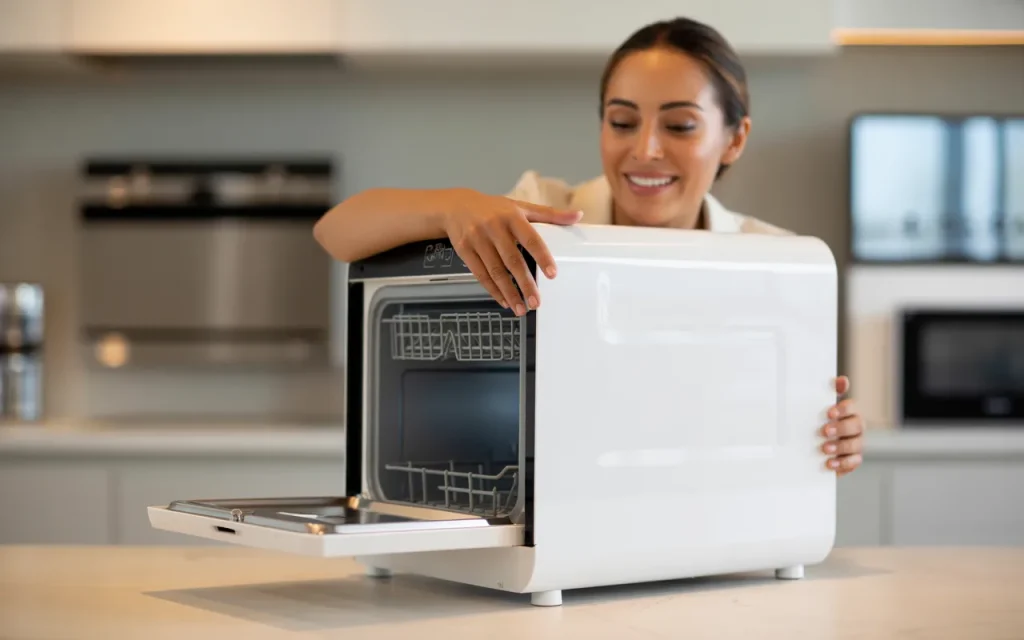
Running The Dishwasher
-
Close the door securely.
-
Press the start button.
-
Ensure water is flowing properly and the drain hose is correctly positioned.
-
During the cycle, avoid opening the door as it may interrupt washing.
Unloading
-
Wait for the cycle to finish completely and allow dishes to cool slightly.
-
Unload the bottom rack first to avoid water dripping on the upper items.
-
Handle fragile items carefully.
| Step | Action |
|---|---|
| 1 | Wait for cycle to finish |
| 2 | Open door carefully |
| 3 | Unload bottom rack first |
| 4 | Handle fragile items gently |
Maintenance And Cleaning Of A Portable Dishwasher
To ensure your dishwasher works efficiently for years, regular maintenance is important.
Cleaning The Filter
-
Remove the bottom rack to access the filter.
-
Rinse under running water to remove food particles.
-
Replace the filter carefully.
Cleaning Spray Arms
-
Detach the spray arms if possible.
-
Remove clogs with a small brush or toothpick.
-
Reattach securely.
Wiping The Interior
-
Use a damp cloth to wipe interior walls.
-
Run an empty cycle with vinegar or a dishwasher cleaner monthly.
“Maintenance is not optional. Clean machines deliver clean dishes and long-lasting performance.” – Jennifer Miles
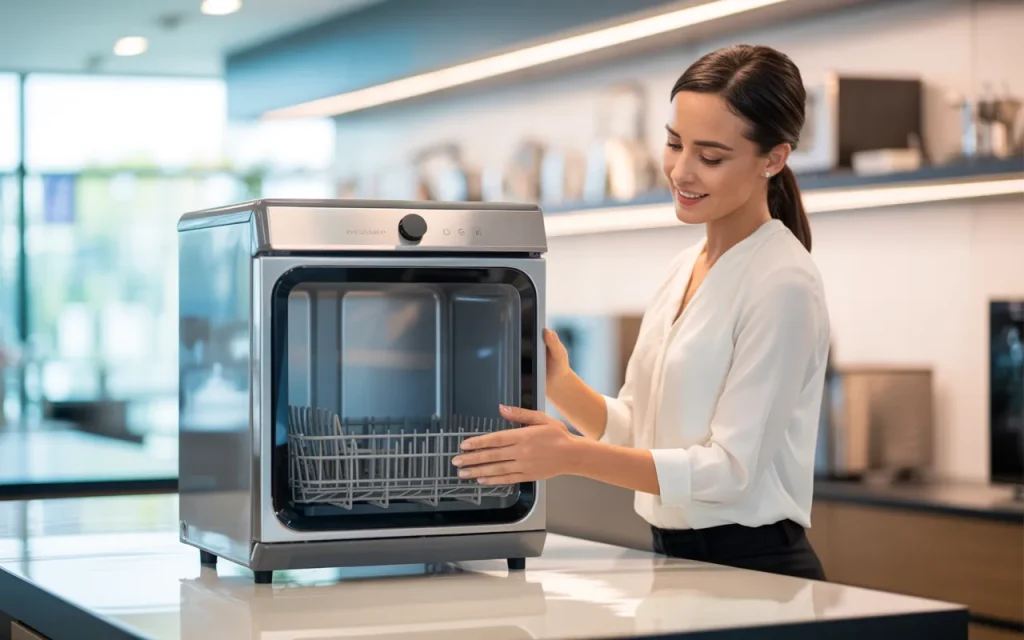
Storing Your Portable Dishwasher
If you need to store your portable dishwasher:
-
Disconnect the water supply.
-
Drain all hoses completely.
-
Store in a dry area to prevent mold and corrosion.
Common Issues And Troubleshooting
Even portable dishwashers are reliable, occasional problems may occur.
-
Dishes are not clean:
-
Check spray arm rotation and loading.
-
Ensure detergent is fresh.
-
-
Water not draining:
-
Inspect the drain hose for clogs.
-
Clean the filter.
-
-
Unpleasant smell:
-
Run a cleaning cycle with vinegar.
-
Wipe rubber gaskets and interior walls.
-
-
Leaking water:
-
Ensure hoses are securely connected.
-
Do not overload the machine.
-
Frequently Asked Questions (FAQs)
Q1: Can I use regular dish soap in a portable dishwasher?
A1: No, always use dishwasher detergent. Regular soap creates excess suds and can damage the machine.
Q2: How often should I clean my portable dishwasher?
A2: Clean the filter weekly and run a vinegar cleaning cycle once a month.
Q3: Can I use a portable dishwasher for large pots?
A3: Yes, but make sure they fit without blocking spray arms. Use the heavy cycle for best results.
Q4: Do portable dishwashers save water?
A4: Yes, they are more water-efficient than washing large loads by hand.
Q5: How long does a portable dishwasher cycle take?
A5: Depending on the cycle, it can take 30 minutes to 2 hours. Eco and light cycles are shorter.
Tips For Energy Efficiency
-
Run full loads to save electricity and water.
-
Use eco-friendly cycles when dishes are lightly soiled.
-
Avoid pre-rinsing excessively, as dishwashers are designed to clean food residue.
Safety Tips
-
Never touch the heating element during or immediately after a cycle.
-
Keep children away when the dishwasher is in use.
-
Avoid using flammable liquids near the appliance.
-
Check hoses and connections regularly for leaks.
Conclusion
Learning How To Use A Portable Dishwasher correctly can save you time, effort, and water while keeping your kitchen clean. By following proper loading techniques, selecting the right detergent, and maintaining the appliance regularly, your portable dishwasher can serve your household efficiently for years. Portable dishwashers are practical, versatile, and ideal for small kitchens or homes without permanent dishwasher installations. With this guide, you now have all the knowledge to enjoy hassle-free, sparkling clean dishes every day.
Related posts
 Which kitchen gadgets save the most time
If you are wondering Which kitchen gadgets save the most time, the clear answer includes food processors, air fryers, pressure cookers, electric kettles, and dishwashers that…
 What kitchen tools do professional chefs use at home
Many home cooks ask what kitchen tools do professional chefs use at home, and the answer is simple: sharp chef’s knives, cast iron pans, stainless steel…
 Biolomix Kitchen Food Stand Mixer
Looking for a reliable mixer for daily baking? The Biolomix Kitchen Food Stand Mixer offers strong mixing, multiple speed levels, and easy cleaning, making it a…