
how to clean an immersion blender – Clean the Right Way
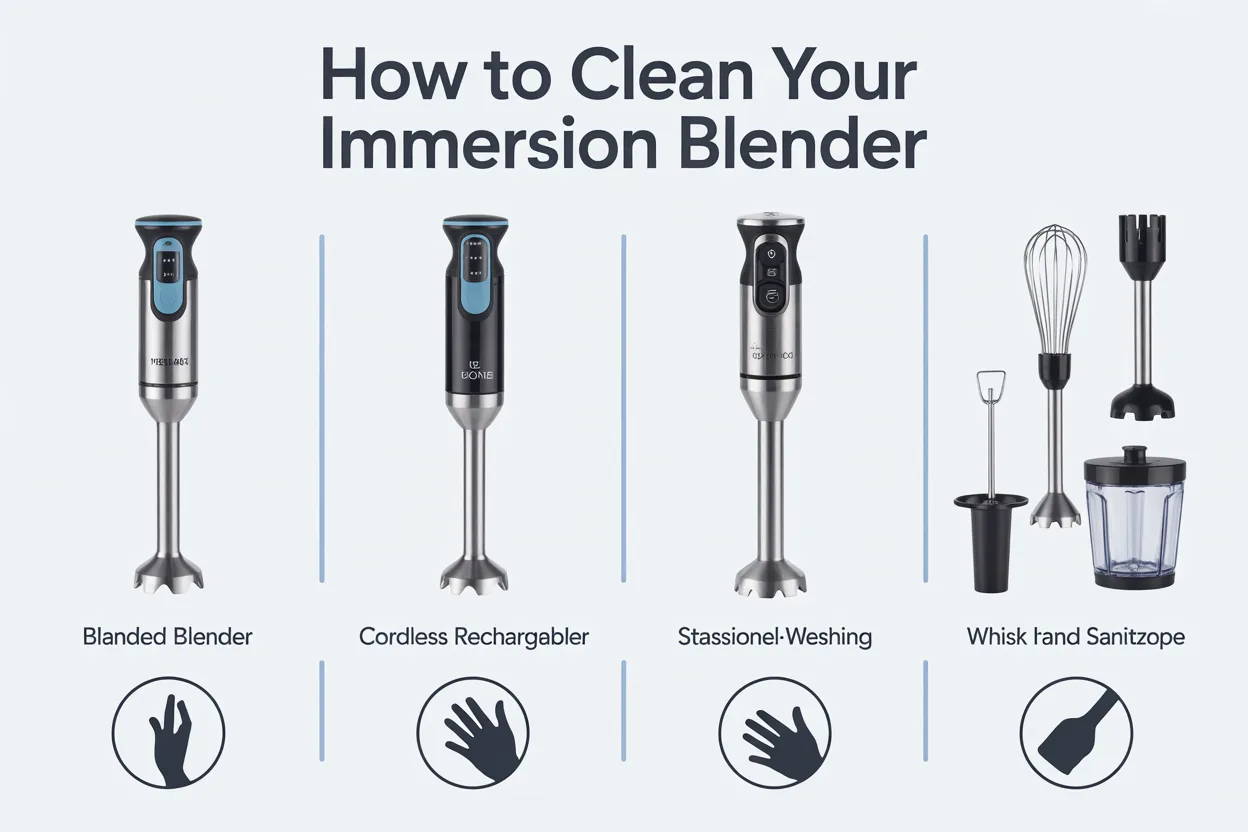
Simple answers about how to clean an immersion blender so it stays safe, fresh, and ready to use. Learn daily, deep, and safe cleaning steps with ease.
An immersion blender is one of those kitchen tools you reach for often. It helps with soups, sauces, smoothies, and even baby food. Because it touches food directly, keeping it clean matters for taste, safety, and long life. Many people rinse it quickly and move on. That habit can leave hidden food bits behind. This guide explains how to clean an immersion blender in a clear, simple way that fits real kitchens and real routines. I have used immersion blenders for years at home and while helping friends in catering kitchens. I have seen what happens when they are cleaned well and when they are ignored. A few easy habits make a big difference.
Why Proper Cleaning Matters
Food sticks to blades and guards. Over time, that buildup can smell bad, affect flavor, and grow germs. A clean blender also works better. The motor stays safe because food does not dry and harden near joints. Cleaning also protects you. Slippery buildup can cause cuts when you handle the blade area.
Chef Lina Morris once said,
“Clean tools show respect for your food and for the people who eat it.”
That idea stays true in any kitchen, big or small.
Know Your Immersion Blender Parts
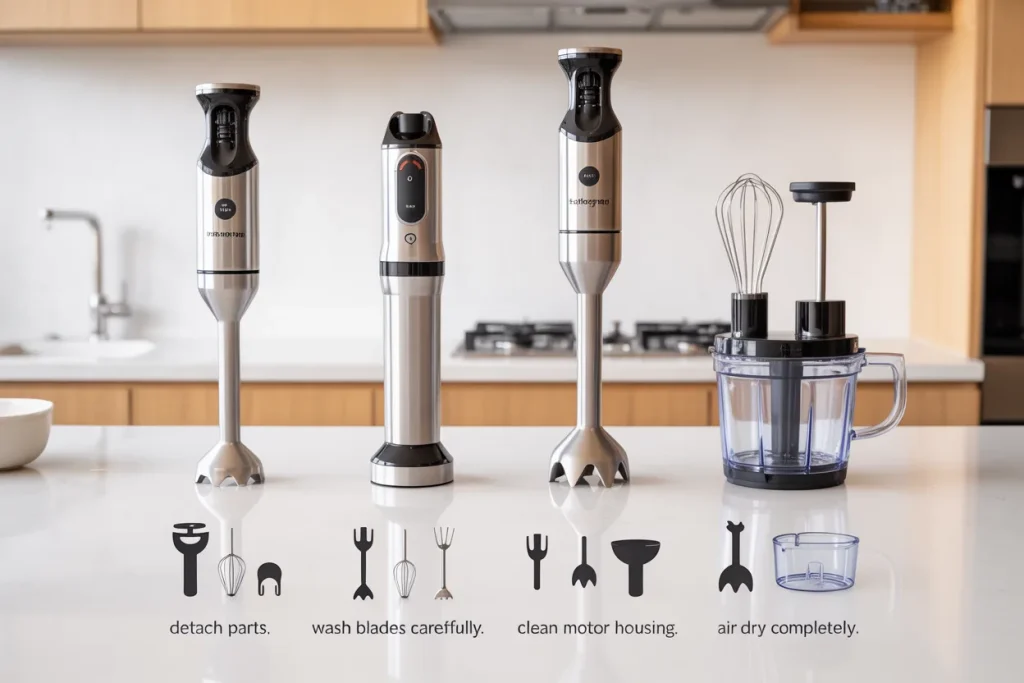
Before cleaning, it helps to know the parts. Most immersion blenders have similar sections.
Common Parts
-
Motor body
-
Blending shaft
-
Blade and guard
-
Buttons or speed controls
Some models have a removable shaft. Others are one piece. Always check your manual if you have it.
Why Parts Matter
The motor body should never go under water. The shaft and blade usually can. Knowing this keeps the blender safe and avoids damage.
Daily Cleaning After Each Use
This is the easiest and most important habit. Right after blending, take one minute to clean.
Quick Rinse Method
Fill a tall cup with warm water and a drop of dish soap. Place the blender head inside. Pulse it for a few seconds. This loosens food from the blade area. Then rinse the shaft under running water. Dry with a towel. This daily routine is often the simplest way to handle how to clean an immersion blender without stress.
When to Do More
If you blended thick foods like nut butter or mashed beans, you may need a brush. Use a soft brush to reach under the blade guard.
Step by Step Hand Washing
Hand washing works best for full cleaning. Follow these steps.
-
Unplug the blender.
-
Remove the shaft if possible.
-
Rinse off loose food with warm water.
-
Add mild dish soap to a sponge or brush.
-
Gently scrub around the blade guard.
-
Rinse well.
-
Dry fully before storage.
This method gives full control and keeps your hands safe.
Chef Aaron Fields shared,
“Slow and gentle cleaning protects both your hands and your tools.”
Can You Put It in the Dishwasher
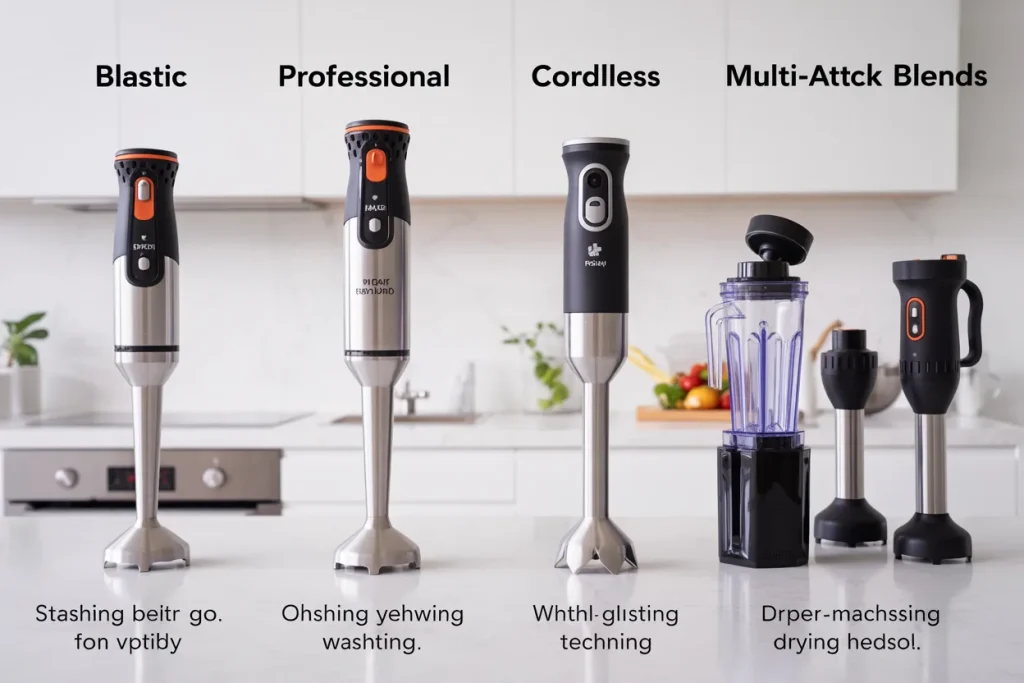
Some immersion blender shafts are dishwasher safe. Many are not. Heat and harsh soap can dull blades or crack plastic.
Check First
Look at the manual or brand website. If it says dishwasher safe, place only the shaft on the top rack.
Best Practice
Even if dishwasher safe, hand washing extends life. Dishwashers are strong and repeated cycles wear parts faster.
Two Common Cleaning Methods Compared
| Method | Best For | Time Needed |
|---|---|---|
| Quick rinse in cup | Light use, soups | 1 minute |
| Hand wash with brush | Thick foods, stains | 3 to 5 minutes |
This table helps you choose based on what you blended.
Deep Cleaning Once a Week
Daily rinsing is good, but deep cleaning keeps things fresh.
Soaking Method
Fill a bowl with warm water and mild soap. Soak the shaft for 10 minutes. Do not soak the motor body. After soaking, scrub gently and rinse.
Vinegar for Odors
If smells remain, mix one cup of water with one tablespoon of white vinegar. Dip the blade area briefly, then rinse. This step helps with odor control. This deeper approach supports how to clean an immersion blender for long term use.
Cleaning After Blending Raw Foods
Raw eggs, meat, or fish need extra care.
Safety Steps
Clean right away
Use hot water
Wash hands before and after
Dry fully
These steps reduce bacteria risk and keep your kitchen safe.
What Cleaning Tools Are Safe to Use
Using the right tools avoids scratches and dull blades.
| Tool | Safe to Use | Notes |
|---|---|---|
| Soft sponge | Yes | Gentle and easy |
| Bottle brush | Yes | Reaches guard area |
| Steel wool | No | Scratches metal |
| Hard scrub pad | No | Dulls blade edge |
Mistakes to Avoid
Many people damage their blender without knowing it.
Common Errors
-
Submerging the motor body
-
Using harsh cleaners
-
Leaving food to dry overnight
-
Touching blades without care
Avoiding these mistakes makes how to clean an immersion blender safer and simpler.
How Often Should You Clean It
After every use, clean the blade area. Once a week, do a deeper clean. If you use it daily, stay consistent. Regular care saves time later.
Home cook Maria Jensen says,
“A clean tool is faster to use next time.”
Storage Tips After Cleaning
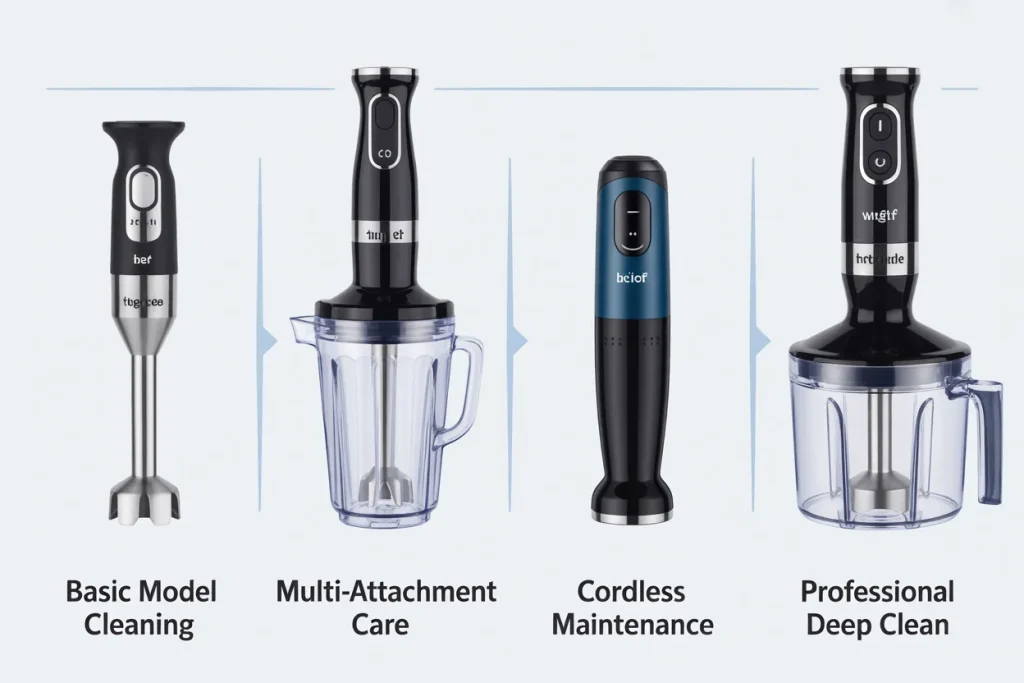
Drying matters as much as washing.
Dry First
Water trapped near joints can cause rust. Air dry or towel dry fully.
Store Smart
Keep the blender in a drawer or stand where the blade is protected. Avoid tossing it loose with other tools. Proper storage supports how to clean an immersion blender by preventing new dirt and damage.
Cleaning Cord and Buttons
Wipe the motor body with a damp cloth. Add a drop of mild soap if needed. Never let water drip inside buttons. Dry right away. This keeps the outside clean without risk.
FAQ Section
How long does cleaning take
Daily cleaning takes about one minute. Full hand washing takes five minutes.
Can soap damage the blade
Mild dish soap is safe. Avoid strong cleaners.
What if food dries on the blade
Soak the shaft in warm soapy water for ten minutes, then brush gently. This method works well for how to clean an immersion blender after heavy use.
Is vinegar safe to use
Yes, in small amounts and rinsed well. It helps with smells.
Should I oil the blade
No oil is needed. Keep it clean and dry.
Extra Care for Long Life
Treat your blender kindly. Do not bang it on pots to shake off food. Let the blade stop fully before lifting from food. These habits reduce wear. Consistent care makes how to clean an immersion blender easier every time.
Environmental and Health Benefits
Cleaning by hand uses less water than dishwashers. It also avoids chemical residue. Clean tools mean safer food for your family.
Final Thoughts and Conclusion
Learning how to clean an immersion blender is about simple habits, not effort. A quick rinse after use, gentle hand washing, and weekly care keep it fresh and safe. You protect your food, your hands, and your tool. Over time, these small steps save money and avoid frustration. A clean immersion blender is always ready to help you cook with confidence and ease.
Related posts
 Which kitchen gadgets save the most time
If you are wondering Which kitchen gadgets save the most time, the clear answer includes food processors, air fryers, pressure cookers, electric kettles, and dishwashers that…
 What kitchen tools do professional chefs use at home
Many home cooks ask what kitchen tools do professional chefs use at home, and the answer is simple: sharp chef’s knives, cast iron pans, stainless steel…
 Biolomix Kitchen Food Stand Mixer
Looking for a reliable mixer for daily baking? The Biolomix Kitchen Food Stand Mixer offers strong mixing, multiple speed levels, and easy cleaning, making it a…