
How To Clean A Countertop Dishwasher

Learn practical tips on how to clean a countertop dishwasher effectively, keeping it fresh, odor-free, and performing at its best for years.
Countertop dishwashers are a convenient solution for small kitchens, apartments, or homes with limited space. They help save time, water, and effort compared to handwashing dishes. But like any appliance, they need regular cleaning to stay efficient, hygienic, and odor-free. If not cleaned properly, food particles, soap residue, and mineral buildup can accumulate, reducing the machine’s performance. In this guide, we will explore how to clean a countertop dishwasher step by step, share expert tips, and answer the most common questions.
Why Cleaning Your Countertop Dishwasher Matters
Keeping your countertop dishwasher clean is essential for several reasons. First, food particles and grease can build up, causing unpleasant odors and affecting the taste of your dishes. Second, mineral deposits from hard water can clog the spray arms, filters, and drainage system, reducing the efficiency of the appliance. Lastly, regular cleaning prevents bacteria and mold growth, ensuring your dishwasher stays safe for everyday use.
“A clean dishwasher is a happy dishwasher, and happy appliances make life easier,” says kitchen expert Sarah Thompson.
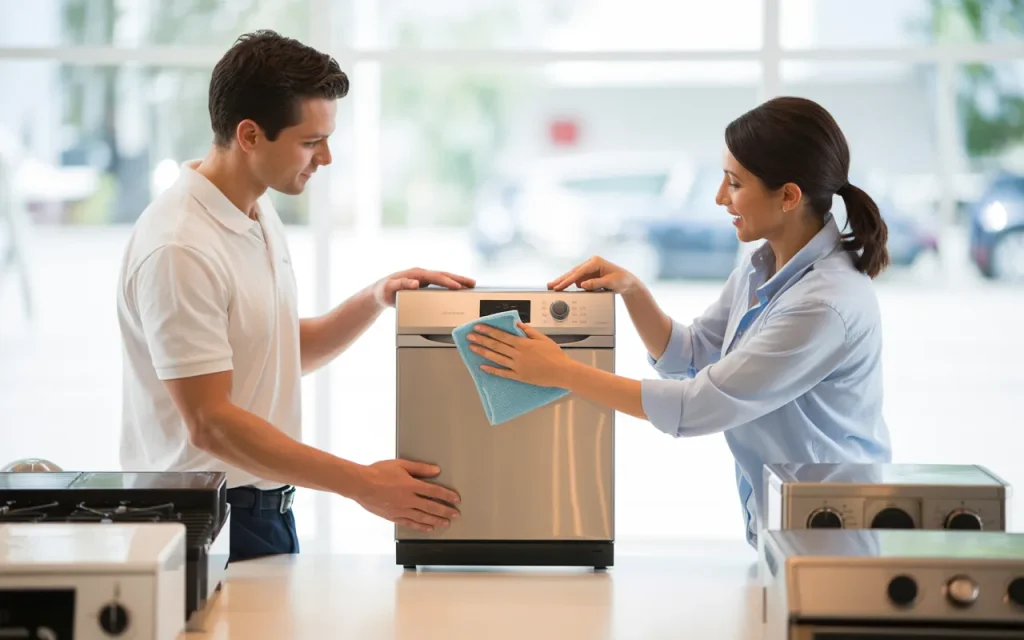
By committing a few minutes each week to clean your countertop dishwasher, you extend its lifespan and ensure your dishes are always sparkling clean.
Tools and Supplies Needed
Before you start, gather the following supplies to make the cleaning process smooth and effective:
| Tool | Purpose |
|---|---|
| White vinegar | Removes limescale and grease |
| Baking soda | Eliminates odors and tough stains |
| Soft cloth or sponge | Wipes interior surfaces without scratching |
| Toothbrush | Cleans hard-to-reach corners and spray arms |
| Dish soap | Light cleaning of removable parts |
| Paper towels | Drying after cleaning |
Having these items ready will make the cleaning process faster and more efficient.
Step-by-Step Guide on How to Clean a Countertop Dishwasher
Cleaning a countertop dishwasher involves several steps:
Unplug the Dishwasher
Safety always comes first. Make sure the dishwasher is completely unplugged before starting any cleaning procedure.
Remove and Clean the Filter
Most countertop dishwashers have a removable filter at the bottom to trap food particles. Take out the filter and rinse it under warm water. Use a toothbrush to gently scrub away stubborn debris.
Clean the Spray Arms
Clogged spray arms can reduce water flow and prevent dishes from being cleaned properly. Remove the spray arms and rinse them under running water. Use a toothpick to remove any debris from the tiny holes.
Wipe the Interior
Mix warm water with a few drops of dish soap and wipe down the interior of the dishwasher with a soft cloth or sponge. Pay attention to the corners and crevices where dirt can accumulate.
Run a Vinegar Cycle
Place a cup of white vinegar in a dishwasher-safe bowl on the top rack and run an empty cycle with hot water. Vinegar helps remove grease, limescale, and odors.
“Regular vinegar cycles keep your dishwasher fresh and free from hidden buildup,” explains home appliance specialist Michael Lee.

Sprinkle Baking Soda
After the vinegar cycle, sprinkle one cup of baking soda at the bottom of the dishwasher and run a short, hot water cycle. This will remove any remaining stains and leave a fresh scent.
Clean the Exterior
Use a damp cloth with a mild dish soap solution to clean the outside of the dishwasher. Dry it thoroughly with a paper towel to prevent water spots.
Inspect the Drain and Hoses
Check the drain area and hoses for clogs or buildup. Clear any obstructions to ensure smooth drainage and prevent unpleasant odors.
Reassemble the Dishwasher
Once all parts are clean and dry, reassemble the dishwasher. Ensure the filter and spray arms are properly secured before plugging the appliance back in.
Tips for Maintaining a Clean Countertop Dishwasher
Maintaining your countertop dishwasher is easier than deep cleaning. Here are some practical tips:
-
Rinse dishes before loading: Removing large food particles reduces filter clogs.
-
Run hot water before starting a cycle: Hot water ensures optimal cleaning.
-
Use dishwasher-safe detergents: Avoid harsh chemicals that can damage the interior.
-
Perform monthly vinegar cycles: Helps prevent buildup and odors.
-
Check seals and gaskets: Wipe them regularly to prevent mold growth.
| Maintenance Task | Frequency |
|---|---|
| Filter cleaning | Weekly |
| Vinegar cycle | Monthly |
| Exterior wipe | Weekly |
| Spray arm check | Monthly |
| Drain inspection | Monthly |
Following these tips will save you time, prevent problems, and keep your dishwasher in top condition.
Signs Your Countertop Dishwasher Needs Cleaning
Even with regular maintenance, your dishwasher may need cleaning if you notice these signs:
-
Foul odors coming from the appliance
-
Dishes not coming out completely clean
-
Water pooling at the bottom of the dishwasher
-
Clogged spray arms or slow drainage
-
Visible mold or limescale buildup
If you see any of these indicators, it is time to clean your countertop dishwasher thoroughly.
Natural Cleaning Alternatives
If you prefer natural solutions over commercial cleaning products, several ingredients can be effective:
-
White vinegar: Dissolves mineral deposits and grease
-
Baking soda: Eliminates odors and stubborn stains
-
Lemon juice: Adds a fresh scent and breaks down residue
Combine these ingredients for a powerful, chemical-free cleaning solution.
“Nature provides the simplest solutions for household cleaning,” says eco-lifestyle blogger Emily Carter.
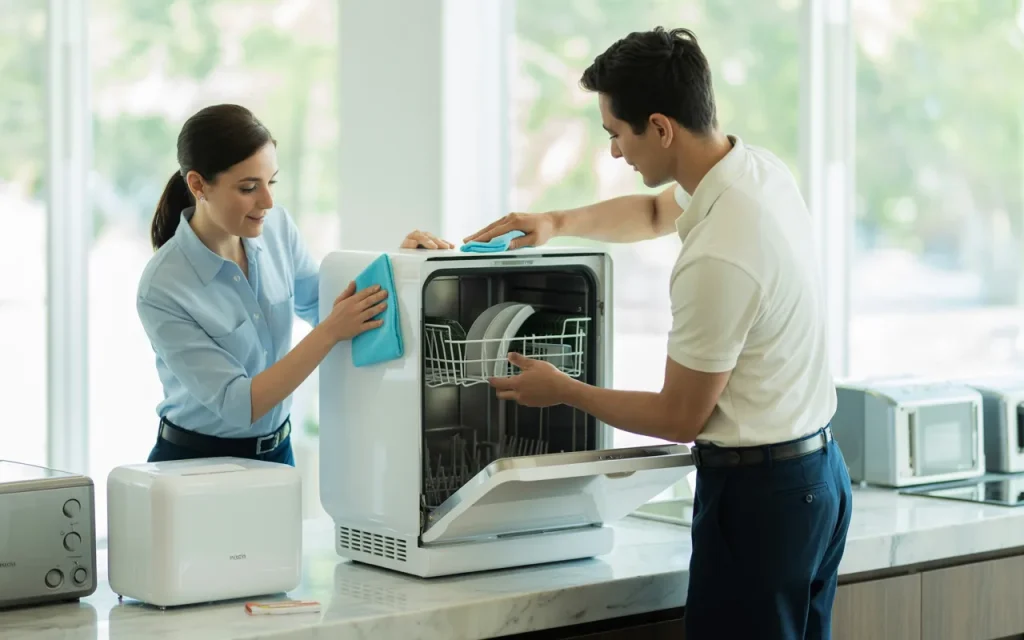
Frequently Asked Questions
How often should I clean my countertop dishwasher?
Clean the filter weekly and perform a deep cleaning with vinegar and baking soda once a month.
Can I use bleach to clean my dishwasher?
Avoid bleach as it can damage rubber seals and interior surfaces. Stick to vinegar, baking soda, or mild dish soap.
My dishwasher smells bad, how can I remove the odor?
Run a vinegar cycle followed by a baking soda cycle. Wipe down seals and gaskets, and ensure the drain is clear.
Are there any parts I should avoid washing in water?
Electrical components, control panels, and motors should never be submerged in water. Only clean these with a damp cloth.
Can I use the dishwasher while cleaning it?
No, always unplug the dishwasher during cleaning to avoid electrical hazards.
Common Mistakes to Avoid
-
Ignoring the filter and drain
-
Using harsh chemicals that damage seals
-
Overloading the dishwasher, leading to clogs
-
Not drying removable parts properly
Avoiding these mistakes ensures the appliance works efficiently and lasts longer.
Benefits of a Clean Countertop Dishwasher
-
Improved cleaning performance
-
Fresher, odor-free dishes
-
Reduced risk of mold and bacteria
-
Longer appliance lifespan
-
Lower energy and water consumption
“A dishwasher is only as effective as the care you give it,” says kitchen maintenance expert John Richards.
Regular cleaning improves both hygiene and efficiency, making your countertop dishwasher a reliable part of your kitchen.
Conclusion
Learning how to clean a countertop dishwasher is simple and rewarding. With a few regular steps like cleaning the filter, wiping the interior, and running vinegar and baking soda cycles, your appliance can remain efficient, fresh, and long-lasting. Maintaining your dishwasher not only ensures sparkling dishes but also protects your investment in the long run.
Related posts
 Which kitchen gadgets save the most time
If you are wondering Which kitchen gadgets save the most time, the clear answer includes food processors, air fryers, pressure cookers, electric kettles, and dishwashers that…
 What kitchen tools do professional chefs use at home
Many home cooks ask what kitchen tools do professional chefs use at home, and the answer is simple: sharp chef’s knives, cast iron pans, stainless steel…
 Biolomix Kitchen Food Stand Mixer
Looking for a reliable mixer for daily baking? The Biolomix Kitchen Food Stand Mixer offers strong mixing, multiple speed levels, and easy cleaning, making it a…