
How to Choose a Cutting Board for Every Kitchen

A clear guide on How to choose a cutting board for daily cooking, covering materials, size, safety, care, and budget so you can pick the right one with confidence.
A cutting board looks simple, yet it plays a big role in daily cooking. It protects your knives, keeps food safe, and makes prep work smooth. Many people buy one quickly and regret it later. Cracks appear, stains stay, or knives turn dull. This guide explains How to choose a cutting board in a clear and friendly way. You will learn what matters, what to skip, and how to match a board to your real needs at home.
I have cooked for family meals, small events, and quiet evenings alone. Over time, I used many boards and saw what lasts and what fails fast. This article shares that experience in plain words, with care for safety, comfort, and value. By the end, you will know how to pick a board that fits your kitchen, your food habits, and your budget.
“A good cutting board feels invisible while you cook. It supports every move without asking for attention.”
Sarah Milton, Home Cook and Food Writer
Why a Cutting Board Choice Matters
A cutting board touches almost every ingredient. Meat, fish, fruit, bread, and herbs all meet its surface. The wrong board can hold bacteria, slide on the counter, or damage knives. The right board feels steady, cleans easily, and lasts for years.
Food safety depends on this choice. Knife care depends on it too. Comfort and speed also improve when the board fits your hands and space. Learning How to choose a cutting board saves money and avoids daily frustration.
Types of Cutting Board Materials
Material is the first thing to check. Each type has clear strengths and limits.
Wood Cutting Boards
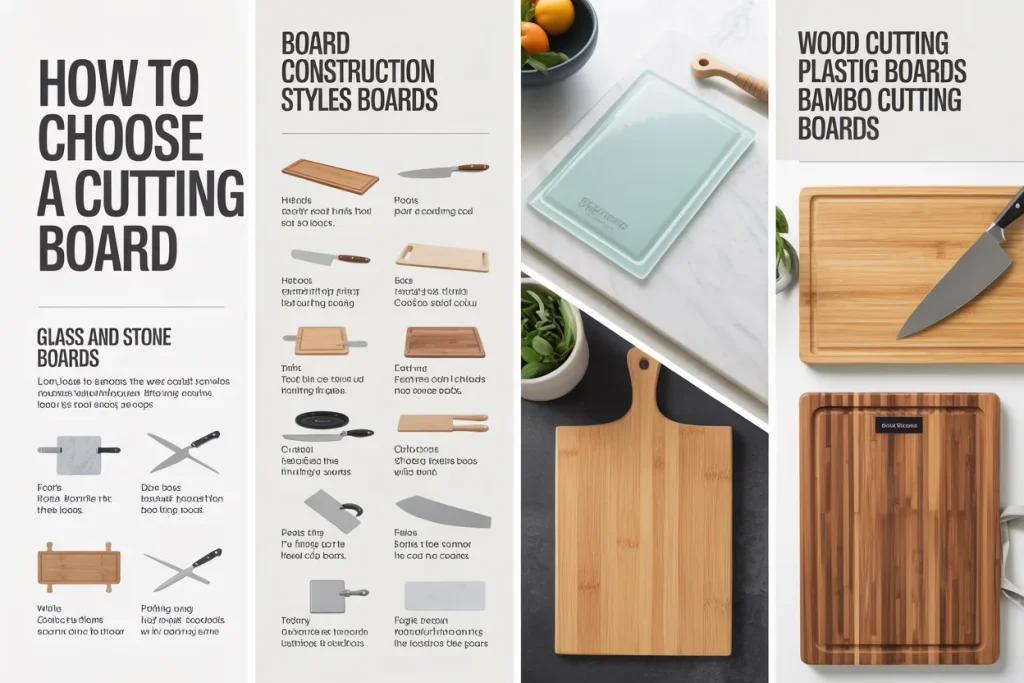
Wood boards are loved for a reason. They feel warm, look nice, and treat knives gently. Hardwoods like maple, walnut, and cherry work best. They resist deep cuts and last long with care.
Wood has natural fibers that close after cutting. This helps reduce bacteria on the surface. Still, wood needs hand washing and regular oiling.
Plastic Cutting Boards
Plastic boards are light, cheap, and easy to clean. Many can go into the dishwasher. They work well for raw meat because they clean fast. Over time, plastic gets deep grooves. These grooves can hold germs if not replaced. Plastic also dulls knives faster than wood.
Bamboo Cutting Boards
Bamboo is a grass, not wood. It grows fast and costs less. Bamboo boards look neat and feel hard. The hardness can wear knives quicker. Bamboo boards also use glue to hold strips together. With age and water, they may split.
Glass and Stone Boards
Glass, marble, and granite boards look modern. They clean easily and do not absorb smells. They are very hard on knives. A few uses can ruin a blade edge. They also slip and feel noisy. These boards work better for serving, not cutting.
Comparing Cutting Board Materials
| Material | Knife Friendly | Easy Cleaning | Durability |
|---|---|---|---|
| Wood | High | Medium | High |
| Plastic | Medium | High | Medium |
| Bamboo | Low | Medium | Medium |
| Glass or Stone | Very Low | High | High |
This table helps you see the trade offs at a glance. For most home kitchens, wood or plastic makes the most sense.
Board Construction Styles
Not all boards are built the same way. The way pieces join affects strength and price.
Edge Grain Boards
Edge grain boards show long wood strips side by side. They cost less and work well for daily use. With proper care, they last many years.
End Grain Boards
End grain boards show the ends of wood fibers. Knives slide between fibers instead of cutting across them. This keeps blades sharp longer.
These boards cost more and weigh more. Many cooks love them for frequent chopping.
“End grain boards feel softer under the knife, even though they look solid and strong.”
Michael Reyes, Culinary Instructor

Choosing the Right Size and Thickness
Size matters more than many think. A board that feels small causes food to fall off. A board that feels huge may stay unused.
Board Size Tips
Choose a board that fits your counter and sink. A common good size is about 12 by 18 inches. This gives room to cut without crowding. If you cook large meals often, a bigger board helps. If space is tight, a medium board works fine.
Board Thickness
Thicker boards stay flat and stable. Thin boards bend and slide. Look for at least 0.75 inches thick for wood boards. Plastic boards can be thinner but should not flex much.
Safety Features to Look For
Safety is a key part of How to choose a cutting board. A few features can prevent slips and spills.
Non Slip Bases
Some boards have rubber feet or grips. These help the board stay in place. If your board lacks grips, place a damp cloth under it.
Juice Grooves
Juice grooves catch liquid from meat or fruit. They keep counters clean. For bread or dry foods, grooves are less important.
Rounded Corners
Rounded edges feel better to hold and clean. Sharp corners chip more easily.
Matching Boards to Food Types
Many kitchens use more than one board. This helps avoid cross contamination.
| Food Type | Best Board Choice |
|---|---|
| Raw meat | Plastic or separate wood |
| Vegetables | Wood |
| Bread | Wood with no grooves |
| Fish | Plastic |
Using separate boards keeps flavors clean and food safer.
Maintenance and Care Basics
A board lasts longer with simple care.
Cleaning Wood Boards
Wash with warm water and mild soap. Dry upright. Oil with food safe mineral oil once a month or when dry.
Cleaning Plastic Boards
Dishwasher safe boards can go in the machine. Check often for deep cuts. Replace when grooves appear.
Avoid Soaking
Never soak boards in water. This causes warping and cracks.
“Caring for a cutting board is less about effort and more about habit.”
Linda Chen, Kitchen Product Tester

Budget and Value Considerations
Price ranges vary a lot. Cheap boards work for short term use. Mid range boards offer better value over time.
A solid wood board costs more at first but lasts years. Plastic boards cost less but need replacement sooner. Balance cost with how often you cook.
Avoid boards that feel too light or rough. They often fail early.
Environmental Impact
Some buyers care about eco choices. Wood from managed forests and bamboo from trusted makers help reduce harm.
Plastic boards last shorter but some recycle. Choose what fits your values and cooking habits.
Common Mistakes to Avoid
Many buyers repeat the same errors.
Buying glass boards for cutting harms knives. Choosing very small boards leads to mess. Ignoring care instructions shortens life.
Learning How to choose a cutting board helps avoid these mistakes with ease.
How to Choose a Cutting Board Based on Cooking Style
Your cooking style guides the best pick.
For Daily Home Cooking
A medium wood board works well. Add a small plastic board for raw meat.
For Heavy Chopping
Choose a thick end grain wood board. It protects knives and hands.
For Small Kitchens
A compact board with grips saves space.
Health and Hygiene Facts
Studies show that wood boards, when cleaned well, can be as safe as plastic. Bacteria does not survive long in dry wood fibers. Plastic boards need closer checks for damage. Replace them often.
Storage Tips
Store boards upright to allow airflow. Avoid stacking wet boards. Keep away from heat sources.
How to Choose a Cutting Board for Gifts
A cutting board makes a thoughtful gift. Choose a nice wood board with a simple design. Avoid very large sizes unless you know the kitchen space.
How to Choose a Cutting Board for Beginners
New cooks need simple tools. Start with one wood board and one plastic board. This covers most needs and builds good habits early.

FAQs
How often should I replace a cutting board?
Replace plastic boards once deep grooves appear. Wood boards last many years if cared for well.
Is wood safe for raw meat?
Yes, if cleaned and dried properly. Many cooks still prefer plastic for raw meat due to ease of cleaning.
Can I put a wood cutting board in the dishwasher?
No. Dishwashers damage wood through heat and water.
What oil is best for wood boards?
Food safe mineral oil works best. Avoid cooking oils as they turn sticky.
Does board color matter?
Color does not affect function. Some plastic boards use colors to separate food types.
Conclusion
A cutting board is more than a flat surface. It shapes how you cook, clean, and care for your tools. By learning How to choose a cutting board, you make cooking safer, easier, and more enjoyable. Focus on material, size, safety, and care. Skip trends that harm knives or add trouble. Choose a board that feels right in your hands and fits your kitchen life. With the right choice, every slice feels smoother and every meal starts on solid ground.
Related posts
 Which kitchen gadgets save the most time
If you are wondering Which kitchen gadgets save the most time, the clear answer includes food processors, air fryers, pressure cookers, electric kettles, and dishwashers that…
 What kitchen tools do professional chefs use at home
Many home cooks ask what kitchen tools do professional chefs use at home, and the answer is simple: sharp chef’s knives, cast iron pans, stainless steel…
 Biolomix Kitchen Food Stand Mixer
Looking for a reliable mixer for daily baking? The Biolomix Kitchen Food Stand Mixer offers strong mixing, multiple speed levels, and easy cleaning, making it a…