
Hand Mixer Vs Stand Mixer
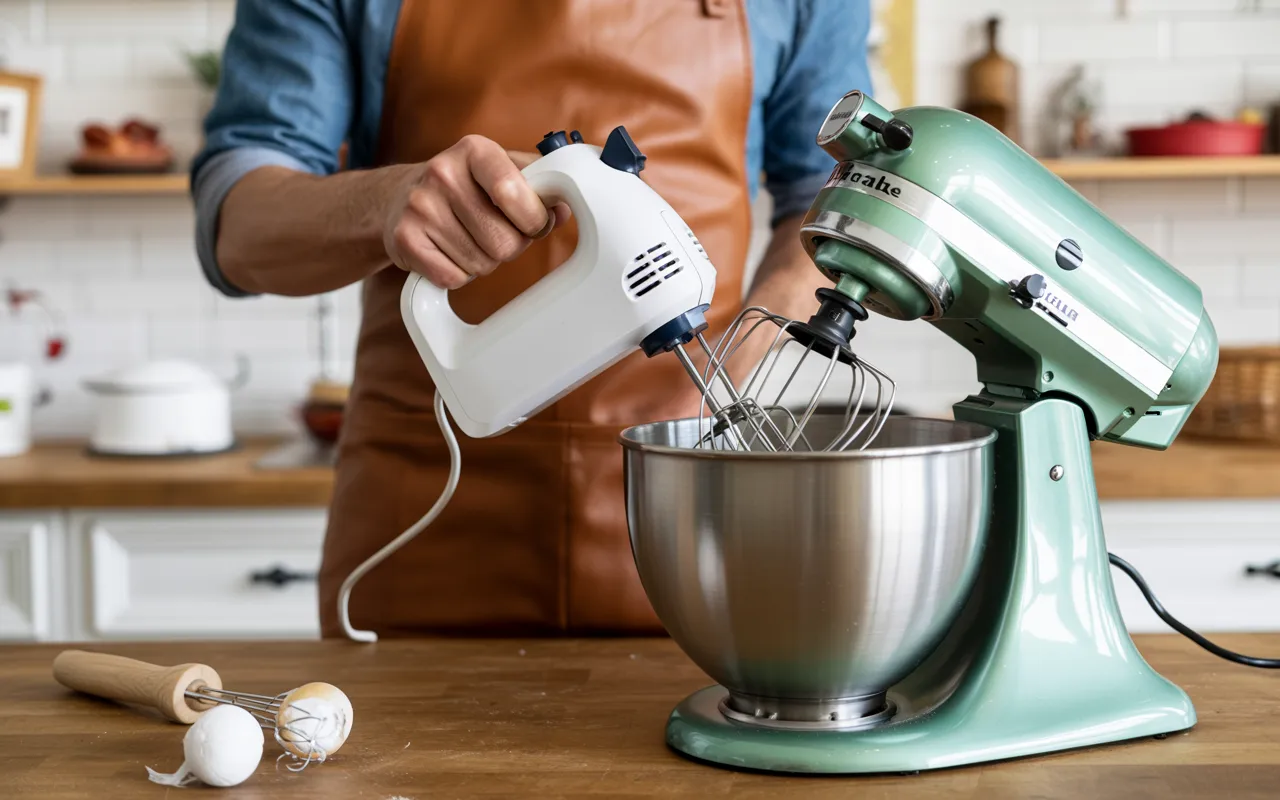
Trying to choose between a hand mixer and a stand mixer? This detailed Hand Mixer Vs Stand Mixer guide explains the key differences, pros, cons, price, power, storage, and which option fits your kitchen needs best.
Choosing between a hand mixer and a stand mixer can feel confusing at first. Both tools mix, whip, and blend ingredients. Both help you bake faster. But they are not the same. Size, cost, speed, and ease of use all matter.
In this complete Hand Mixer Vs Stand Mixer guide, I will walk you through everything you need to know. I have used both for years in home kitchens. I have baked cakes, kneaded dough, and whipped cream with each type. I will share honest advice so you can pick what truly fits your needs.
“The right mixer depends on how often you bake and what you bake.” – Daniel Harris
Let us start with the basics.
What Is a Hand Mixer
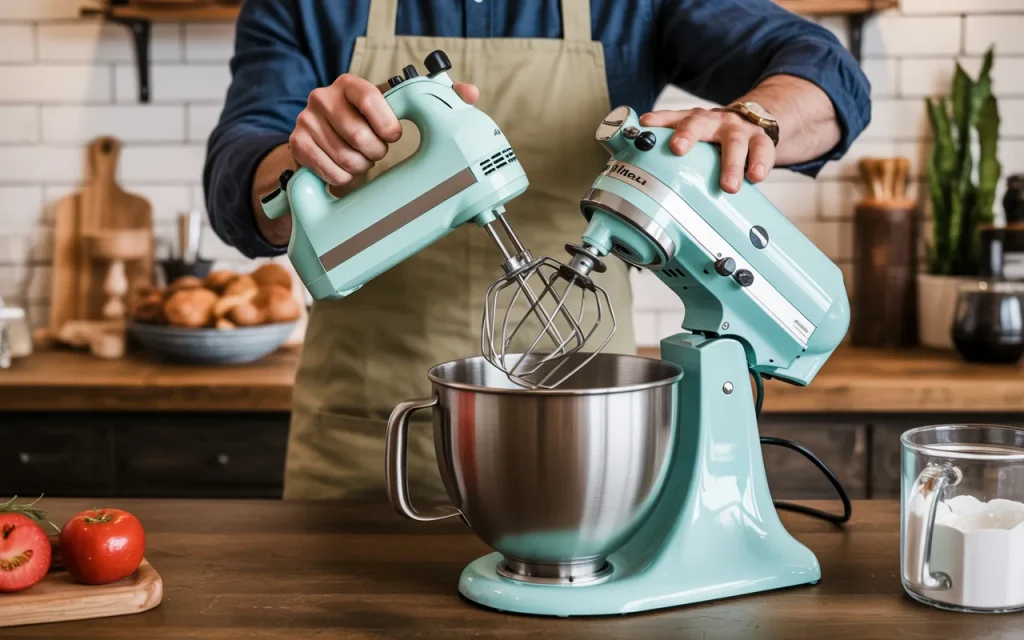
A hand mixer is a small electric tool that you hold in your hand while mixing. It has two beaters that spin at different speeds. You move it around the bowl as it mixes.
Hand mixers are light, easy to store, and affordable. Most models come with beaters and sometimes dough hooks.
Many home cooks choose a hand mixer because it is simple and does not take much space.
What Is a Stand Mixer
A stand mixer is a larger machine that sits on your counter. It has a mixing bowl that locks into place and a mixing head that spins attachments automatically.
You do not need to hold it while mixing. It works on its own once turned on.
Popular brands include:
-
KitchenAid
-
Cuisinart
-
Bosch
Stand mixers often come with paddle attachments, dough hooks, and whisks. Some models also support extra tools like pasta rollers and meat grinders.
Hand Mixer Vs Stand Mixer: Key Differences
Below is a simple comparison to help you see the main differences quickly.
Comparison Table
Feature
Hand Mixer
Stand Mixer
Size
Small and light
Large and heavy
Storage
Easy to store in drawer
Needs counter space
Power
Moderate
High
Hands Free
No
Yes
Price
Lower cost
Higher cost
This table gives a quick view of the Hand Mixer Vs Stand Mixer decision. But there is more to know before choosing.
Power and Performance
Power matters if you bake bread or thick dough. A stand mixer usually has a stronger motor. It can handle heavy mixtures without slowing down.
A hand mixer works well for:
-
Cake batter
-
Whipped cream
-
Cookie dough
-
Mashed potatoes
A stand mixer works better for:
-
Bread dough
-
Large batches
-
Thick frostings
-
Long mixing tasks
If you bake once a week, a hand mixer may be enough. If you bake bread often, the stand mixer is stronger and more stable.
“If you love baking bread, a stand mixer saves your arms and time.” – Daniel Harris
Ease of Use
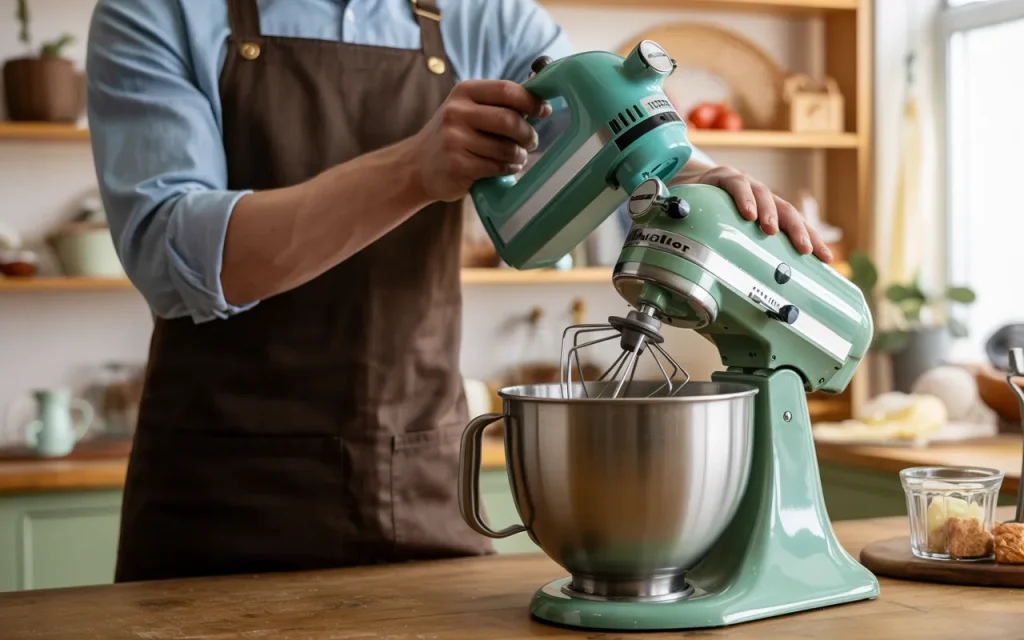
A hand mixer is simple. Plug it in, hold it, and mix. It is quick for small jobs. Cleanup is easy. You remove the beaters and wash them.
A stand mixer requires more setup. You attach the bowl, choose an attachment, and lock everything in place. It takes more space. But it mixes without your help.
This is where the real difference in Hand Mixer Vs Stand Mixer becomes clear. One needs your hands. The other works alone.
Price and Budget
Cost plays a big role in the Hand Mixer Vs Stand Mixer choice.
Price Table
Type
Average Price Range
Hand Mixer
30 to 100 USD
Stand Mixer
200 to 600 USD
Hand mixers are budget friendly. They are great for students, small kitchens, or casual bakers.
Stand mixers cost more because they offer more power and attachments.
If you bake only during holidays, a hand mixer is enough. If baking is part of your weekly routine, a stand mixer may be worth the investment.
Kitchen Space and Storage
Space matters in small kitchens. A hand mixer fits in a drawer or cabinet. It is light and easy to move.
A stand mixer sits on the counter. It is heavy and harder to store. Many people leave it out because lifting it often can be tiring.
If your kitchen is small, this part of the Hand Mixer Vs Stand Mixer comparison is very important.
Mixing Speed and Control
Hand mixers often have 5 to 9 speed settings. You control movement by hand. This gives flexibility, especially for scraping bowl sides.
Stand mixers also have multiple speeds. Some high-end models offer slow start features to prevent splashing.
With a stand mixer, you can walk away for a minute while it works. That makes multitasking easier.
Attachments and Versatility
Most hand mixers include:
-
Beaters
-
Dough hooks
-
Whisk attachment
Stand mixers offer more options. Brands like KitchenAid sell pasta makers, spiralizers, and food grinders that connect to the mixer.
If versatility matters, this part strongly affects the Hand Mixer Vs Stand Mixer choice.
Cleaning and Maintenance
Hand mixers are easier to clean. The beaters detach quickly. The body only needs a wipe.
Stand mixers require cleaning the bowl, attachments, and sometimes the mixing head. It takes more effort.
But both are simple to maintain if cleaned right after use.
Noise Level
Hand mixers are lighter but can be loud at high speeds.
Stand mixers are steady and produce deeper motor sounds. Premium models are quieter.
If noise bothers you, test before buying.
Which One Is Better for Beginners
For beginners, a hand mixer is less expensive and easy to learn. You do not need much setup.
For serious baking hobbyists, a stand mixer makes tasks easier.
The Hand Mixer Vs Stand Mixer decision often depends on your baking goals.
Best Choice for Small Families
Small families who bake simple recipes will likely be happy with a hand mixer.
Large families or frequent bakers benefit from the capacity of a stand mixer.
Energy Use
Hand mixers use less electricity. They run for shorter times.
Stand mixers use more energy because of stronger motors.
For basic home baking, energy difference is small.
Durability and Lifespan
Stand mixers are built to last many years. Some last decades with good care.
Hand mixers may last several years but are less heavy duty.
This is another key factor in Hand Mixer Vs Stand Mixer decisions.
When to Choose a Hand Mixer
Choose a hand mixer if:
-
You bake occasionally
-
You have limited space
-
You want a lower cost option
-
You prefer lightweight tools
When to Choose a Stand Mixer
Choose a stand mixer if:
-
You bake weekly
-
You make bread often
-
You need hands free mixing
-
You want extra attachments
“Buy based on your real habits, not what looks impressive on the counter.” – Daniel Harris
Frequently Asked Questions
Is a stand mixer better than a hand mixer
It depends on your needs. For heavy dough and frequent baking, a stand mixer is stronger. For simple recipes, a hand mixer works well.
Can a hand mixer make bread dough
Yes, but it may struggle with thick dough. It can overheat if used too long.
Is a stand mixer worth the money
If you bake often, yes. It saves time and effort.
Which lasts longer
Stand mixers usually last longer due to stronger build quality.
Can beginners use a stand mixer
Yes. It is easy to use once set up.
Final Thoughts on Hand Mixer Vs Stand Mixer
Choosing between these two tools does not need to feel confusing. Think about how often you bake, what you bake, and how much space you have.
A hand mixer is light, affordable, and perfect for simple tasks. A stand mixer is stronger, more versatile, and ideal for serious baking.
In this full Hand Mixer Vs Stand Mixer guide, we looked at power, price, space, performance, and long term value. There is no single best option for everyone. The best choice is the one that fits your kitchen and habits.
Related posts
 Which kitchen gadgets save the most time
If you are wondering Which kitchen gadgets save the most time, the clear answer includes food processors, air fryers, pressure cookers, electric kettles, and dishwashers that…
 What kitchen tools do professional chefs use at home
Many home cooks ask what kitchen tools do professional chefs use at home, and the answer is simple: sharp chef’s knives, cast iron pans, stainless steel…
 Biolomix Kitchen Food Stand Mixer
Looking for a reliable mixer for daily baking? The Biolomix Kitchen Food Stand Mixer offers strong mixing, multiple speed levels, and easy cleaning, making it a…