
Dishwasher Vs Hand Washing Water Usage
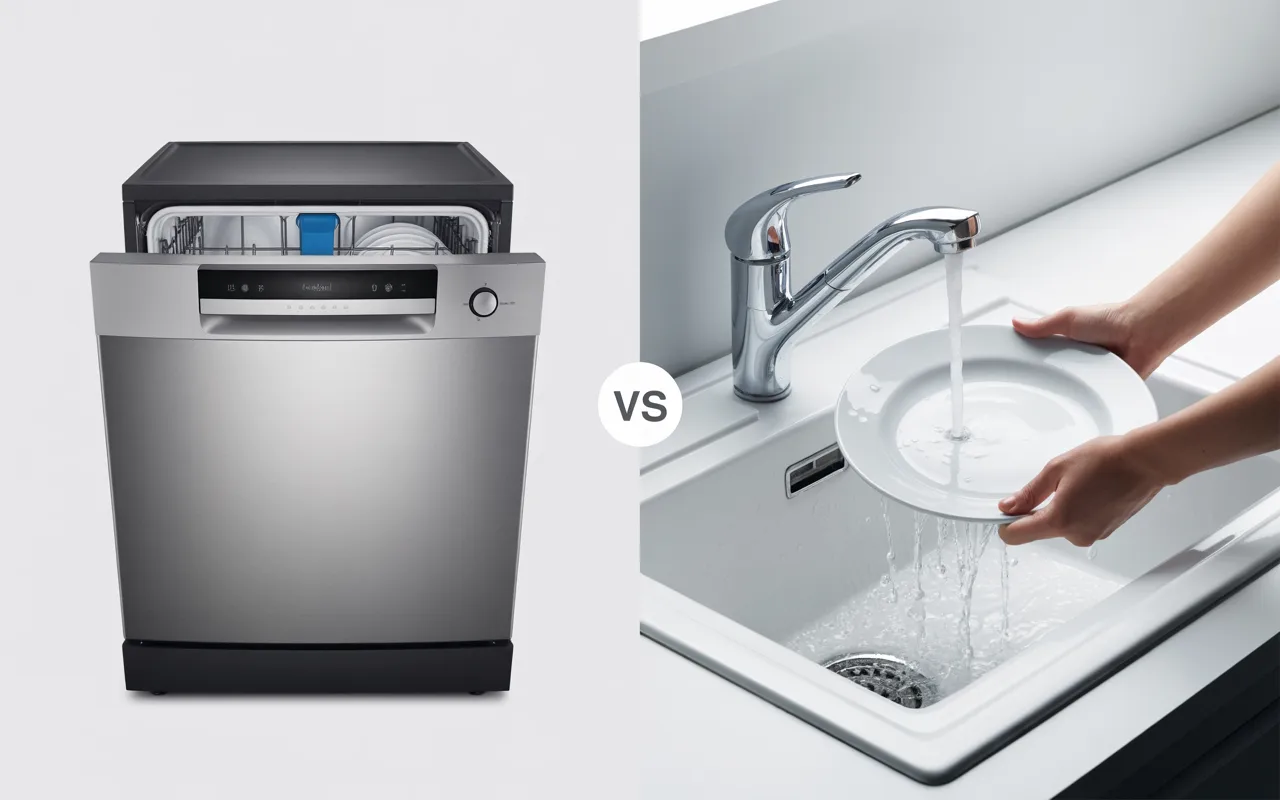
Explore the Dishwasher Vs Hand Washing Water Usage to understand which method saves more water and energy for your daily dishwashing routine.
Washing dishes is a daily task in every household. Many of us wonder whether using a dishwasher or washing by hand is better for water consumption. The choice between dishwashers and hand washing affects not only water usage but also energy bills and overall environmental impact. In this article, we will break down Dishwasher Vs Hand Washing Water Usage, giving you practical insights, tips, and comparisons to make an informed decision for your home.
What is Dishwasher Water Usage?
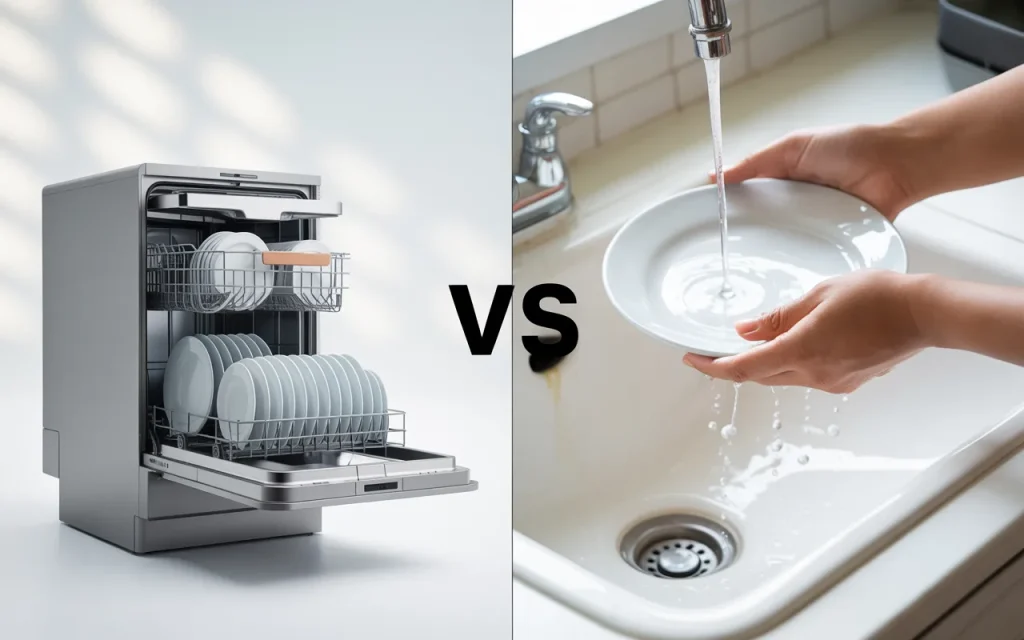
Dishwashers have become a common appliance in modern kitchens. They offer convenience and promise efficiency, but many still question how much water they actually consume. A standard dishwasher uses between 3 to 6 gallons of water per cycle, depending on the model and the wash program. Newer Energy Star-certified dishwashers often use even less, around 2.5 to 4 gallons per cycle.
Dishwashers work by spraying hot water at high pressure across dishes, which cleans effectively while minimizing water wastage. They also heat the water internally, which can be more energy-efficient than heating water on a stove or in a sink.
Average Dishwasher Water Usage
- Dishwasher Type Water Usage per Cycle (Gallons)
Standard Dishwasher 3–6
Energy Star-Certified Dishwasher 2.5–4
Eco Mode Dishwasher 2–3
Hand Washing Water Usage
Hand washing dishes is a more traditional method, but it can use significantly more water than a dishwasher if not done carefully. On average, washing a full sink of dishes with running water can use 20 gallons or more. Even filling the sink partially and rinsing dishes individually can use around 8–10 gallons.
One of the main reasons hand washing can consume more water is continuous running water during scrubbing and rinsing. People often underestimate the water wasted during rinsing, pre-soaking, and cleaning heavily soiled dishes.
Average Hand Washing Water Usage
- Hand Washing Method Water Usage (Gallons)
Running Water for Each Dish 20+
Filling Sink Once for Rinse 8–10
Soaking Before Washing 5–7
Comparing Dishwasher Vs Hand Washing Water Usage
When comparing Dishwasher Vs Hand Washing Water Usage, the difference becomes very clear. Dishwashers generally use much less water per dish than hand washing, especially when the dishwasher is fully loaded.
Efficiency: Dishwashers are designed to recycle water within the cycle, whereas hand washing often wastes water continuously.
Time-saving: Dishwashers allow you to load dishes and walk away, saving not just water but also time.
Consistent Cleaning: Dishwashers maintain high water temperatures, ensuring better hygiene compared to hand washing in lukewarm water.
A 2018 study by the Natural Resources Defense Council (NRDC) found that dishwashers can save up to 5,000 gallons of water per year for a typical family of four, compared to hand washing.
“A dishwasher properly used is one of the most water-efficient appliances in a home.” – Sarah Wilson, Environmental Expert
Factors Affecting Water Usage in Hand Washing
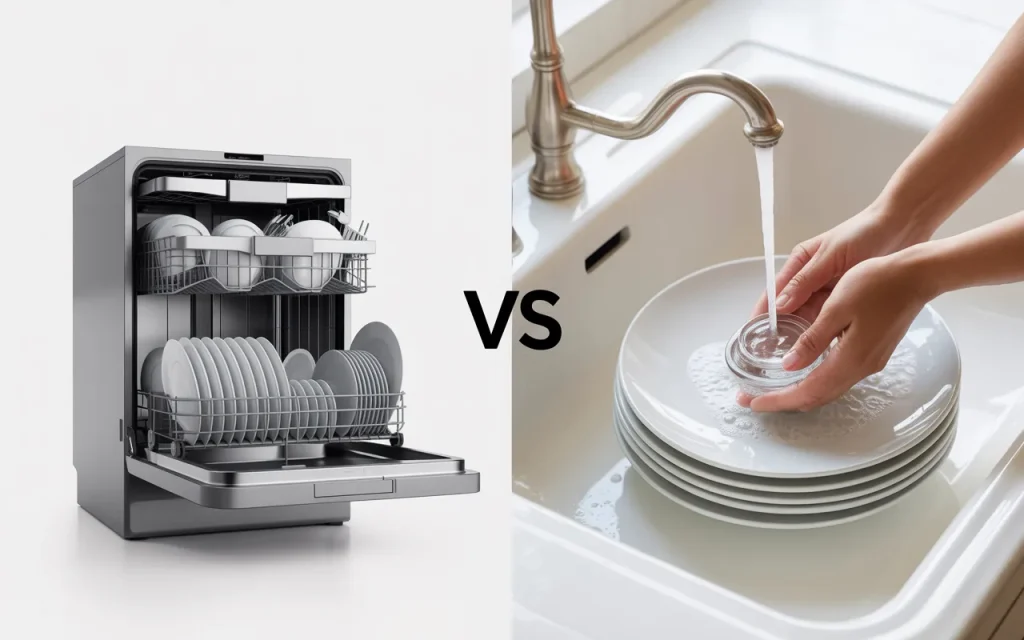
Water usage during hand washing can vary depending on several factors. Number of dishes: The more dishes you wash, the more water you use. Washing method: Using a running tap uses more water than filling a basin. Pre-rinsing habits: Rinsing dishes before washing can significantly increase water usage. Water pressure: High-pressure taps increase water flow, causing more wastage.
By being mindful of these factors, you can reduce water usage even when washing by hand. Simple steps like filling the sink and using a bowl for rinsing can cut down water consumption by half.
Energy Usage Comparison
While this article mainly focuses on water usage, energy consumption is also relevant in the Dishwasher Vs Hand Washing Water Usage debate. Dishwashers heat water internally, usually more efficiently than home water heaters. Hand washing uses hot water from the home supply, which can increase your electricity or gas bill if used for extended periods.
Using a dishwasher on an energy-efficient setting can reduce energy consumption by up to 50 percent compared to hand washing in hot water.
“Efficiency is not just about water; it’s also about energy. Modern dishwashers achieve both.” – Mark Johnson, Home Appliances Specialist
Tips to Reduce Water Usage in Hand Washing
Even if you prefer hand washing, there are several ways to conserve water. Fill a basin: Instead of washing under running water, fill a basin for washing and another for rinsing. Avoid pre-rinsing: Most modern dishwashers can handle food residue without pre-rinsing. Soak heavily soiled dishes: Soaking can reduce the need for running water during scrubbing. Use efficient taps: Install aerators to reduce water flow. Group dishes together: Wash multiple items before rinsing to avoid continuous water use.
Advantages of Using a Dishwasher
Using a dishwasher offers several benefits beyond water conservation. Saves time: You can load dishes and continue with other tasks. Better hygiene: High-temperature water kills germs more effectively. Consistent cleaning: Dishwashers handle greasy and baked-on food efficiently. Reduces breakage: Careful loading reduces the chance of chipping or breaking dishes.
When looking at Dishwasher Vs Hand Washing Water Usage, it is clear that dishwashers are not only water-efficient but also practical for busy households.
Environmental Impact
Water conservation is critical for the environment. The average household that switches from hand washing to a dishwasher can significantly reduce water consumption and energy usage. Lower water usage decreases strain on municipal water supplies and reduces energy used for heating water, which in turn reduces carbon emissions.
“Every gallon saved counts. Efficient appliances are small steps that create big environmental impact.” – Emily Thompson, Environmental Advocate

Dishwasher Vs Hand Washing Water Usage: Cost Implications
Water usage directly affects utility bills. Using a dishwasher efficiently can lower both water and energy bills. While hand washing seems cheaper at first glance, the continuous use of water and energy to heat it can make hand washing more expensive over time.
Example: Dishwasher uses 4 gallons per cycle, 7 cycles per week equals 28 gallons per week. Hand washing uses 20 gallons per day, 7 days per week equals 140 gallons per week.
The difference is significant. Over a year, a household could save thousands of gallons of water by using a dishwasher.
Frequently Asked Questions (FAQs)
Which uses more water, dishwasher or hand washing? Hand washing generally uses more water unless done very efficiently. Modern dishwashers are designed to minimize water usage.
Can a dishwasher clean better than hand washing? Yes, dishwashers use high-temperature water and consistent spraying, which kills germs and cleans thoroughly.
Are there eco-friendly dishwashers? Yes, Energy Star-certified and eco-mode dishwashers use less water and energy while maintaining cleaning efficiency.
How can I reduce water usage while hand washing? Use a filled basin for washing, avoid continuous running water, and group dishes for washing and rinsing.
Does dishwasher use more electricity? Energy-efficient dishwashers often use less electricity than heating water for extended hand washing sessions.
Conclusion
The comparison of Dishwasher Vs Hand Washing Water Usage clearly shows that dishwashers, especially modern and energy-efficient models, are far superior in conserving water. While hand washing offers flexibility and a traditional approach, it often uses more water and energy unless careful methods are applied.
Related posts
 Which kitchen gadgets save the most time
If you are wondering Which kitchen gadgets save the most time, the clear answer includes food processors, air fryers, pressure cookers, electric kettles, and dishwashers that…
 What kitchen tools do professional chefs use at home
Many home cooks ask what kitchen tools do professional chefs use at home, and the answer is simple: sharp chef’s knives, cast iron pans, stainless steel…
 Biolomix Kitchen Food Stand Mixer
Looking for a reliable mixer for daily baking? The Biolomix Kitchen Food Stand Mixer offers strong mixing, multiple speed levels, and easy cleaning, making it a…