
Difference Between Chef Knife and Utility Knife

Clear guide on the Difference between chef knife and utility knife, explaining size, daily use, food tasks, grip comfort, and which knife suits home cooks and pros across regions.
Choosing the right kitchen knife can feel confusing at first. Many cooks own several knives but still pause before slicing a tomato or trimming meat. The Difference between chef knife and utility knife often causes that pause. These two knives look similar at a glance, yet they serve different needs. Knowing how they differ helps you cook faster, safer, and with more joy.
This guide is written for home cooks, food lovers, and anyone who wants clear answers. The words are simple. The advice is practical. The goal is to help you pick the knife that fits your hands, your food, and your kitchen style.
As Julia Child once said, “A knife feels right when it becomes part of your hand.” That feeling starts with knowing what each knife is meant to do.

What Is a Chef Knife?
A chef knife is the main work tool in most kitchens. It usually measures between 8 and 10 inches long. The blade is wide near the handle and gently curves toward the tip. This shape helps with rocking cuts on a board.
Most cooks use a chef knife for chopping onions, slicing meat, cutting herbs, and breaking down large foods. It can handle many tasks in one meal. That is why it often sits front and center on the counter.
The weight of a chef knife gives control. The wide blade also helps move food from board to pan. In many homes in the US, UK, and Australia, this knife is the first one people buy.
What Is a Utility Knife?
A utility knife is smaller and lighter. Its blade is usually 4 to 7 inches long. The blade is narrow and often straight, with a gentle curve near the tip.
This knife is great for small jobs. Think of slicing fruit, trimming fat, cutting sandwiches, or peeling citrus. It fills the gap between a chef knife and a paring knife.
In smaller kitchens, like city flats in Europe or compact homes in Asia, a utility knife gets a lot of use. It takes less space and feels easy in the hand.
Why the Difference Matters in Real Cooking
The Difference between chef knife and utility knife shows up the moment you start cooking. A large squash needs a strong, long blade. A soft peach needs a light touch. Using the wrong knife can slow you down or make cuts uneven.
Safety also plays a role. A knife that is too big for a small task can slip. A knife that is too small for a big job can strain your hand. Matching the knife to the task helps avoid accidents.
As Gordon Ramsay says,
“Respect the knife, and it will respect you.” Respect begins with choosing the right one.
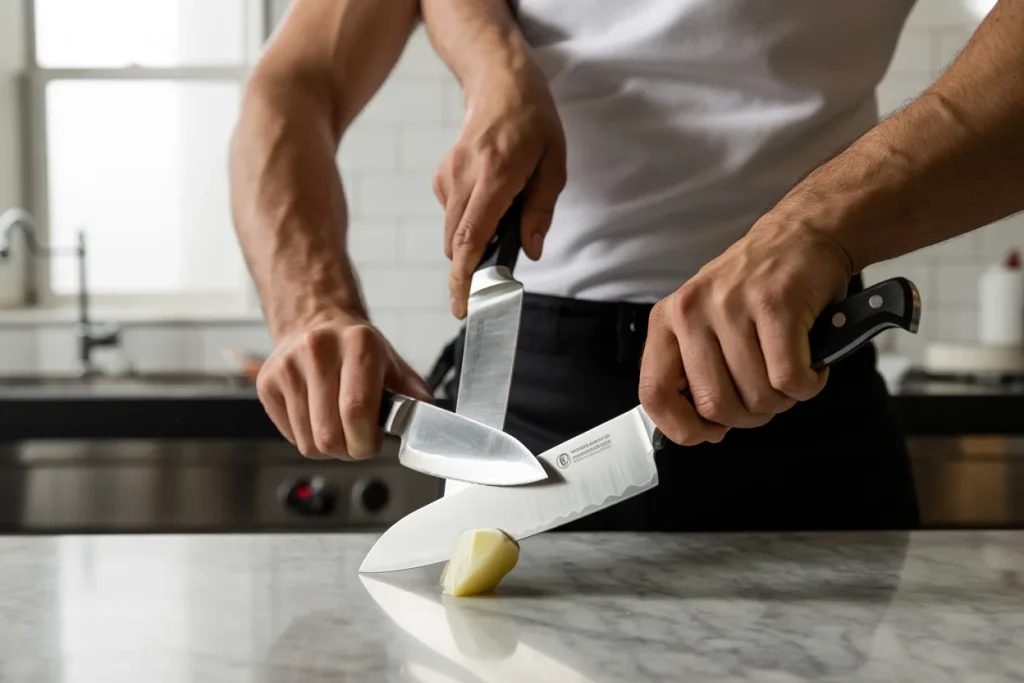
Blade Size and Shape Comparison
The blade is the most visible difference. Size and curve affect how the knife moves.
Length and Width
A chef knife is longer and wider. This gives reach and strength. A utility knife is shorter and slimmer. This gives control for detail work.
Tip Design
Chef knives have a pointed tip for fine cuts and piercing. Utility knives have a softer tip that works well for slicing and trimming.
Blade Size and Shape
| Feature | Chef Knife | Utility Knife |
|---|---|---|
| Blade length | 8 to 10 inches | 4 to 7 inches |
| Blade width | Wide | Narrow |
| Best motion | Rocking cut | Straight slice |
The Difference between chef knife and utility knife becomes clear when you hold them side by side. One feels bold. The other feels nimble.
Weight, Balance, and Hand Feel
Weight affects comfort. A chef knife has more mass. This helps cut dense foods with less force. A utility knife feels light and quick. Balance matters too. Chef knives often balance near the bolster, the thick part near the handle. Utility knives balance closer to the hand. People with small hands often enjoy the ease of a utility knife. People who cook large meals often like the steady feel of a chef knife.
Common Tasks for Each Knife
The Difference between chef knife and utility knife also shows in daily kitchen tasks.
Tasks for a Chef Knife
- Chopping onions and carrots
- Slicing raw or cooked meat
- Cutting cabbage or lettuce
- Mincing herbs
Tasks for a Utility Knife
- Slicing apples or pears
- Cutting sandwiches
- Trimming fat from meat
- Cutting cheese blocks
Task Match Guide
| Task | Better Choice |
|---|---|
| Large vegetables | Chef knife |
| Small fruits | Utility knife |
| Herbs | Chef knife |
| Snack prep | Utility knife |
Masaharu Morimoto once said, “A knife must match the food, not the ego.” This simple idea saves time and effort.
Skill Level and Learning Curve
New cooks often feel more at ease with a utility knife. It feels less heavy and less risky. The cuts are small and controlled.
A chef knife takes a bit more practice. Learning the rocking motion and grip can take time. Yet many cooks say it becomes second nature after regular use.
The Difference between chef knife and utility knife here is about comfort and confidence. Neither choice is wrong. It depends on your habits.
Kitchen Size and Cooking Style
Your kitchen space matters. In large family kitchens, a chef knife shines. Big boards and wide counters support its size.
In small apartments or shared kitchens, a utility knife feels easier to store and clean. It suits quick meals and light prep.
Across regions, habits differ. In North America, chef knives are common. In parts of Asia and Europe, smaller knives see daily use. The Difference between chef knife and utility knife often reflects local cooking styles.
Maintenance and Care
Both knives need care to stay sharp and safe.
Wash by hand and dry right away. Store on a magnetic strip or in a sheath. Sharpen regularly using a stone or a trusted service.
Chef knives may need sharpening more often due to heavy use. Utility knives keep their edge longer if used for light tasks.
Good care extends the life of both tools.
Price and Value
Chef knives often cost more. They use more steel and are built for heavy work. Prices vary by brand and material.
Utility knives cost less and offer strong value for small tasks. Many cooks buy both over time.
The Difference between chef knife and utility knife in price reflects their size and role, not quality alone.
Can One Replace the Other?
Some cooks try to use one knife for everything. A chef knife can handle small tasks with care. A utility knife can handle medium tasks with patience.
Still, each has limits. A utility knife struggles with large foods. A chef knife can feel clumsy for fine cuts.
Having both gives balance. Yet if you choose one, base it on what you cook most.
Environmental and Regional Buying Tips
Look for knives made with durable steel. Long life means less waste. Some regions favor local brands that match local foods.
In coastal areas where fish is common, lighter knives see more use. In regions with root-heavy diets, stronger knives matter more.
The Difference between chef knife and utility knife can guide smart, local choices.

Frequently Asked Questions
What is the main Difference between chef knife and utility knife?
The main difference is size and task range. A chef knife handles large, varied jobs. A utility knife handles small, precise tasks.
Can a beginner start with a chef knife?
Yes. Many beginners do well with a chef knife after some practice. Others prefer starting with a utility knife for ease.
Is a utility knife the same as a paring knife?
No. A utility knife is larger than a paring knife and handles more tasks.
Which knife is safer?
Both are safe when used right. Safety depends on grip, task match, and focus.
Do professionals use utility knives?
Yes. Many pros keep one close for quick, small cuts.
Conclusion
The Difference between chef knife and utility knife is simple once you see it in action. One is built for big, bold prep. The other is made for light, careful work. Both have a place in a well-loved kitchen.Think about your meals, your space, and your hands. Choose the knife that feels right and fits your daily cooking. With the right tool, every cut feels smoother and more confident.
Related posts
 Which kitchen gadgets save the most time
If you are wondering Which kitchen gadgets save the most time, the clear answer includes food processors, air fryers, pressure cookers, electric kettles, and dishwashers that…
 What kitchen tools do professional chefs use at home
Many home cooks ask what kitchen tools do professional chefs use at home, and the answer is simple: sharp chef’s knives, cast iron pans, stainless steel…
 Biolomix Kitchen Food Stand Mixer
Looking for a reliable mixer for daily baking? The Biolomix Kitchen Food Stand Mixer offers strong mixing, multiple speed levels, and easy cleaning, making it a…