
How To Grease A Baking Pan Properly
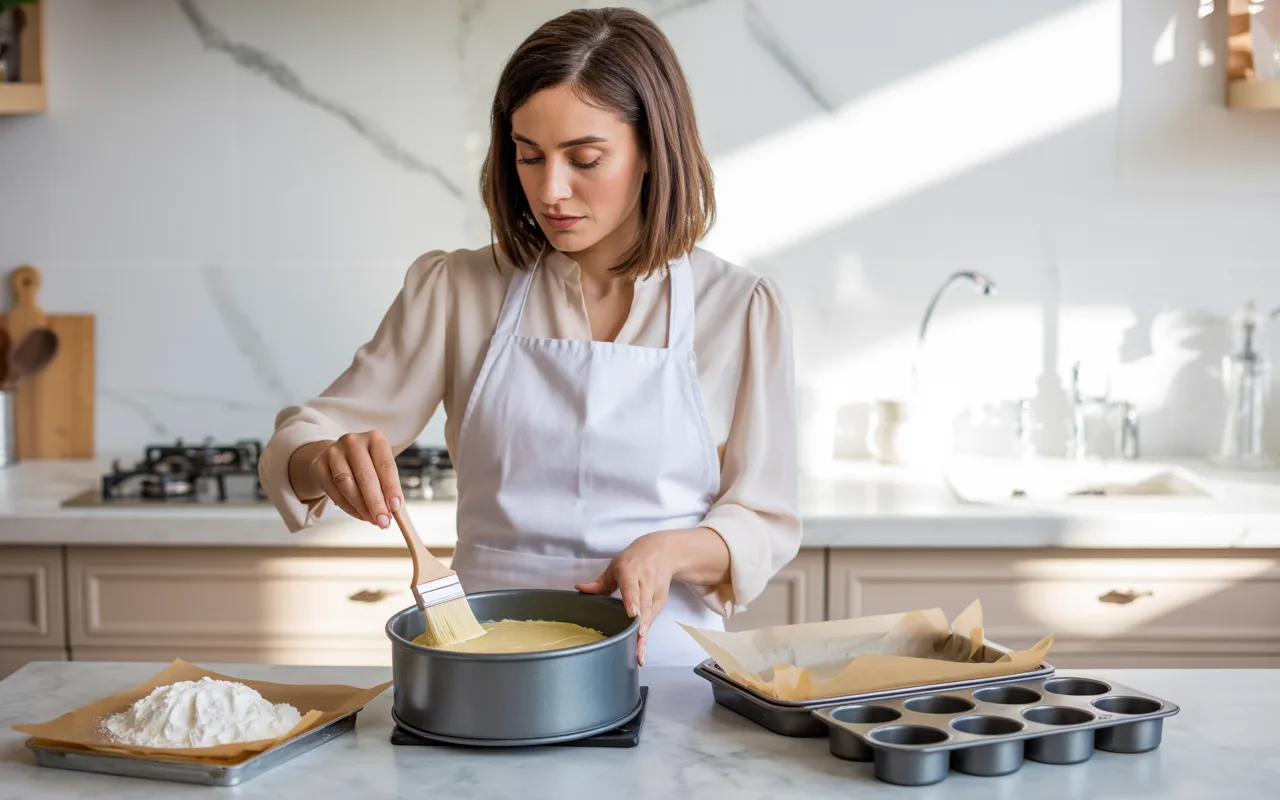
Learn clear steps on How To Grease A Baking Pan Properly so cakes, breads, and cookies release cleanly every time without sticking or breaking.
Baking at home should feel calm and joyful. Yet one small step often causes stress. That step is pan prep. A cake that sticks or tears can ruin hours of care. Many home bakers face this problem, even after years in the kitchen. The good news is that this skill is easy to learn. With the right method, your baked goods will slide out clean and whole.
This guide explains How To Grease A Baking Pan Properly in clear and simple steps. You will learn which fat to use, how much to apply, and when to add flour or paper. These tips come from real kitchen use, not theory. Each section is written to help you avoid common mistakes and feel sure before the oven heats up.
“A well prepared pan is the quiet hero of good baking.”
Maria Collins
Why Greasing a Baking Pan Matters
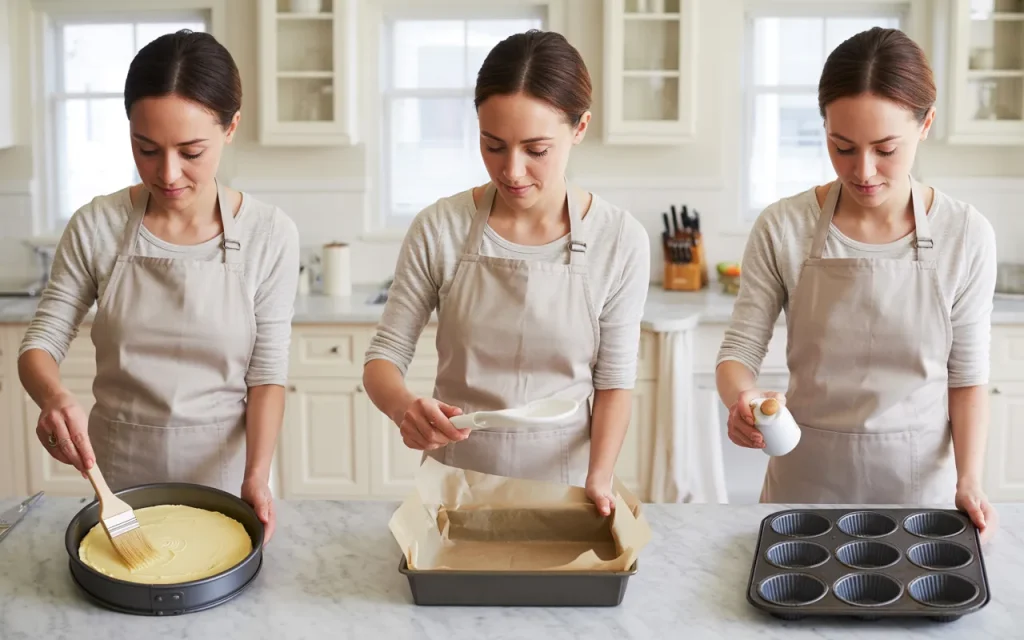
Greasing a pan does more than stop sticking. It shapes how heat moves through the batter. It also affects the crust, color, and texture of your bake. A dry pan can pull moisture from the batter. This causes cracks and uneven edges.
When you learn How To Grease A Baking Pan Properly, you protect your effort and ingredients. Butter, oil, or spray creates a thin layer between food and metal. This layer lets steam escape while still allowing even browning.
Skipping this step or rushing it often leads to broken cakes. It can also cause cookies to burn on the bottom. Pan prep is small, but its impact is huge.
Tools and Ingredients You Will Need
You do not need fancy gear. Most kitchens already have what is required. The key is to choose the right tool for the job and use it well.
Basic Greasing Tools
| Tool |
Best Use |
|
Pastry brush |
Even spread of butter or oil |
| Paper towel |
Quick and clean coating |
| Clean fingers |
Works well with solid butter |
These tools help you reach corners and edges. Corners are the most common sticking spots.
Choosing the Right Grease for Your Recipe
Not all recipes want the same fat. A sponge cake needs a light touch. A loaf bread needs a firm coat. Picking the right grease helps the bake rise and release.
Butter is popular because it tastes good. It also helps flour stick if you dust the pan. Oil spreads fast and covers thin layers well. Shortening is thick and stays in place.
For chocolate cakes, butter or oil both work. For sticky foods like honey cakes, oil works best. Knowing How To Grease A Baking Pan Properly means matching the fat to the food.
“Good baking starts before the batter is mixed.”
James Holloway
Step by Step Guide to Greasing a Baking Pan
This section gives a clear method that works for most pans and recipes. Follow these steps in order. Do not rush.
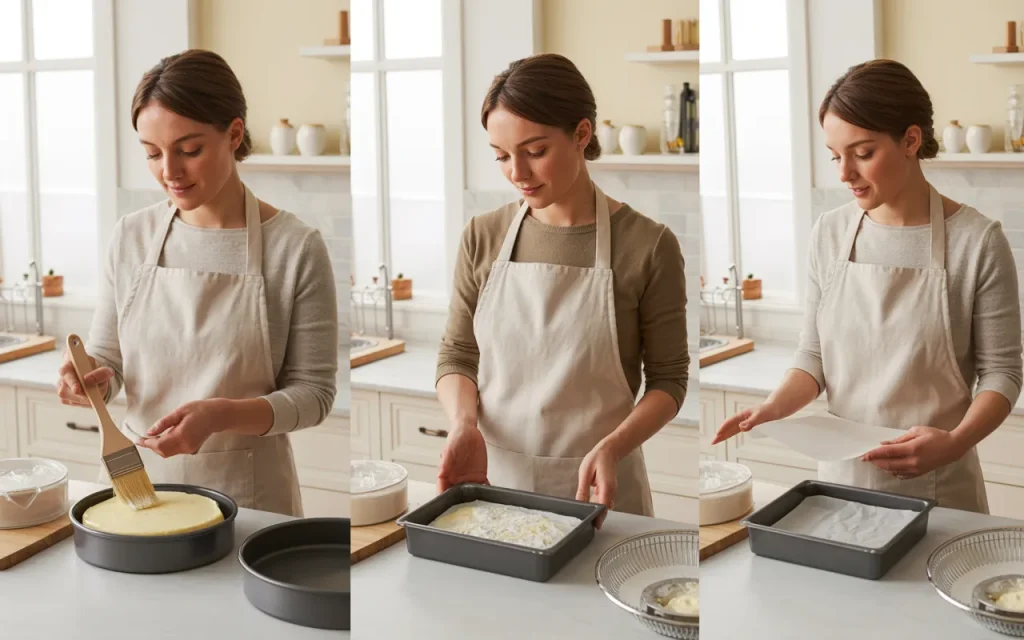
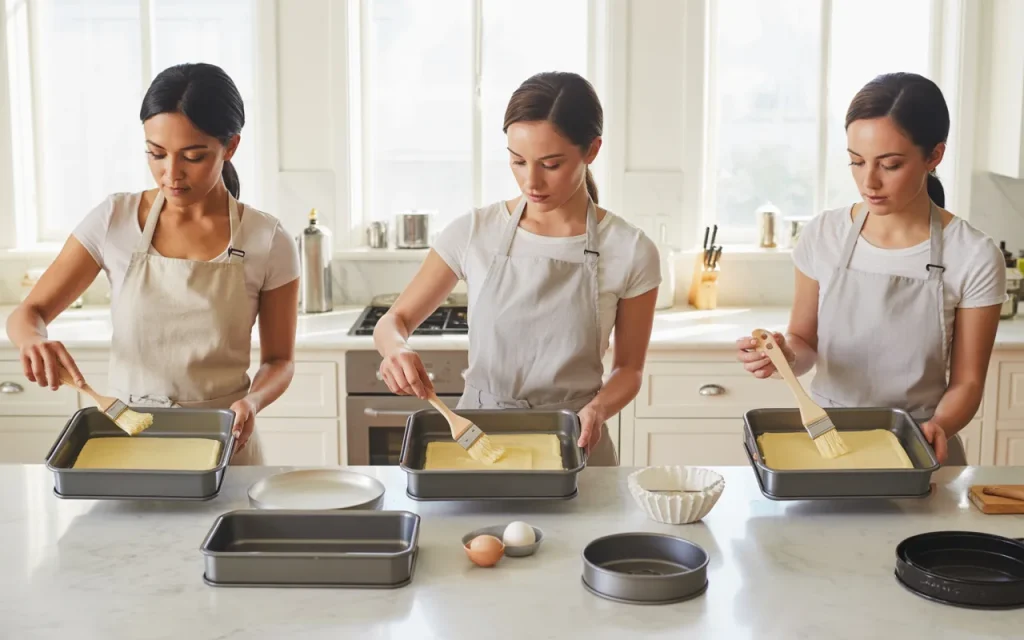
First, make sure the pan is clean and dry. Even small crumbs can cause sticking. Next, take a small amount of your chosen fat. Less is better than more. Too much grease can fry the batter edges.
Spread the fat across the base. Then move up the sides. Pay extra care to corners. Use a brush or towel to smooth it out. The layer should look shiny, not thick.
This simple routine is the core of How To Grease A Baking Pan Properly. It takes under one minute but saves a bake.
When and How to Use Flour After Greasing
Some recipes ask for a floured pan. This step adds a dry barrier. It is helpful for soft cakes that may tear.
After greasing, add one spoon of flour to the pan. Tilt and tap the pan so flour coats the grease. Shake out extra flour into the sink.
Do not skip shaking. Too much flour leaves white marks on the cake. Cocoa powder can replace flour for chocolate cakes.
Flouring is not needed for cookies or bars. Knowing How To Grease A Baking Pan Properly includes knowing when to stop.
Using Parchment Paper with Grease
Parchment paper adds extra safety. It is great for tall cakes and sticky batters. Cut the paper to fit the pan base.
Grease the pan first. Place the paper on the base. Then grease the paper lightly. This double layer helps the paper stick flat and release later.
Do not line the sides unless the recipe asks. Grease alone works there. This method is part of How To Grease A Baking Pan Properly for special bakes.
“Parchment paper is a baker’s quiet backup plan.”
Elena Ruiz
Common Mistakes to Avoid
Many baking fails come from small errors. These mistakes are easy to fix once you spot them.
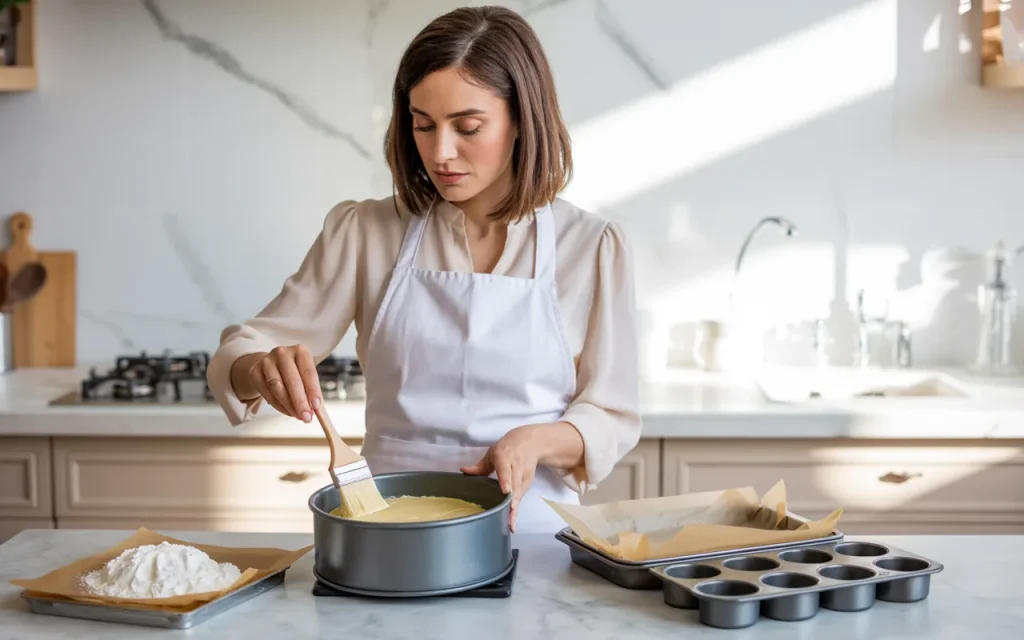
One mistake is using too much grease. Thick layers cause greasy edges. Another mistake is missing the corners. Batter loves to cling there.
Using cold butter straight from the fridge also causes uneven coating. Let butter soften first. Cooking spray alone may fail for sugar rich batters.
Avoid guessing. Follow clear steps. That is the heart of How To Grease A Baking Pan Properly.
Special Pan Types and How to Grease Them
Different pans need slight changes in method. Here are a few common ones.
Nonstick Pans
These still need grease. Light oil or butter works best. Avoid metal tools that scratch the surface.
Glass Pans
Glass heats slowly. Grease well and avoid thick butter layers. Oil works better here.
Bundt Pans
These have many curves. Use a brush and thick grease. Flour well. Bundt cakes are famous for sticking. Each pan teaches you more about How To Grease A Baking Pan Properly with practice.
How Greasing Affects Baking Results
Grease does more than release food. It affects rise and color. Well greased sides help batter climb evenly. Dry sides can cause dips. Grease also affects crust. Butter gives a golden edge. Oil gives a soft edge. Choose based on the result you want.
Once you see the link, you will value How To Grease A Baking Pan Properly even more.
Frequently Asked Questions
Can I skip greasing if my pan is nonstick?
No. Nonstick helps, but it is not a full fix. Light grease protects the pan and the bake.
Is baking spray safe for all recipes?
It works for many, but high sugar batters may still stick. Butter or oil is safer there.
Should I grease the pan before or after preheating?
Always grease before adding batter. Oven heat does not change this step.
Can I reuse parchment paper?
Yes, if it is clean and flat. Do not reuse if burned or torn.
What is the best way to grease for brownies?
Use butter or oil. Skip flour. Line with parchment for easy lift.
Conclusion
Learning How To Grease A Baking Pan Properly is one of the most useful baking skills. It saves time, food, and stress. This guide shared simple tools, clear steps, and common fixes. These tips work for cakes, breads, and cookies alike.
Baking should feel rewarding. With proper pan prep, your bakes will release clean and look great. Use these steps each time. With practice, it will become second nature, and your kitchen wins will grow.
Related posts
 Which kitchen gadgets save the most time
If you are wondering Which kitchen gadgets save the most time, the clear answer includes food processors, air fryers, pressure cookers, electric kettles, and dishwashers that…
 What kitchen tools do professional chefs use at home
Many home cooks ask what kitchen tools do professional chefs use at home, and the answer is simple: sharp chef’s knives, cast iron pans, stainless steel…
 Biolomix Kitchen Food Stand Mixer
Looking for a reliable mixer for daily baking? The Biolomix Kitchen Food Stand Mixer offers strong mixing, multiple speed levels, and easy cleaning, making it a…